Friday, February 26, 2016

An Ancient Capital, an Earthquake, and the Tiger and Dragon Pagodas

On our drive south from Sun Moon Lake, we passed through orchards of dragon fruit, stands of betel wood, vast rice paddies and tiered, hillside,tea plantations before our arrival in the culturally rich city of Tainan. The capital of Taiwan well into the 1800's, when Taipei replaced it as the seat of government, Tainan was originally founded by the Dutch. Today, remnants of a brick fort they erected remain as a popular tourist attraction.

Lunch was at the venerable Chitken Noodle, a 100-year-old restaurant which features stout wooden beams and specializes in local cuisine. A sweet milkfish was delectable, and an oyster omelet, washed down with melon tea, was a treat.


Less delightful, although fascinating, was a visit to a temple complex that had been destroyed in the infamous earthquake of 1999. The quake rattled much of the island and caused more than 2,000 deaths. Viewing the devastation in person was sobering. The temple ruins were intentionally left intact to serve as a reminder of the loss suffered and a new temple has been constructed nearby.


My hotel room was rattled by a tremor that evening, which did not at all faze the locals, but certainly shook me--literally and figuratively. Two days after our departure Tainan suffered an earthquake and 117 people were killed.

Our final excursion in the area was a visit to the Dragon and Tiger Pagodas, on the shores of Lotus Lake in Kaohsiung. By entering through the Dragon's mouth and exiting through the Tiger's, bad luck may be turned into good fortune. That evening, my hotel was near the Love River, a tourist area featuring a river walk, lighted bridges, and cruise boats. At dinner, I was the only western tourist in the restaurant and the earnest waitress was quick to appear with a knife and fork. Smiling, I picked up my chopsticks and she returned the grin; a shared moment of true communication.


Fo Guang Shan monastery and the Rugged Eastern Coast

The largest Buddhist monastery in Taiwan is a dazzling array of Golden Buddhas, brilliant gardens, acres of buildings, and a massive temple. A dominant statute of Buddha towers 36 meters, and the entire complex sprawls over 30 hectares.


An art museum focusing on depictions of Buddha had some very interesting modern scuptures


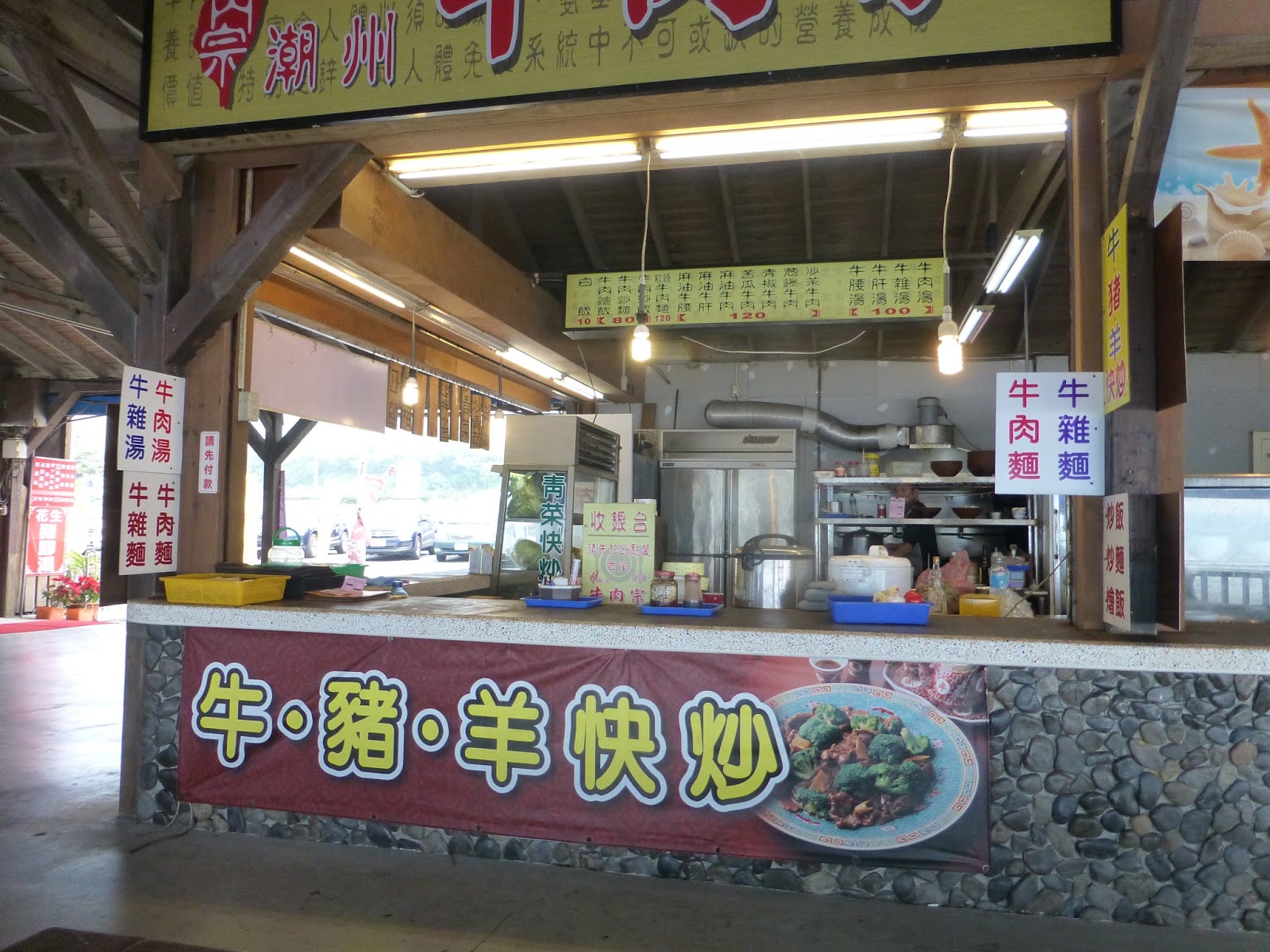
Lunch was taken at a simple beachside establishment which served the regional specialty of pig knuckle, accompanied by a hearty bowl of pig intestine soup. Both were quite good, particularly the tender knuckle, although I confess that enjoying a large bottle of Taiwanese beer undoubtedly improved the experience.


I spent the night in Taitung, known for its hot springs, and enjoyed the pleasures of a rooftop onsen. A musical group from the Philippines, singing in English, attempted to entertain a stoic gathering of tourists from mainland China. The musicians prevailed upon me to join in singing a few Beatles songs, which I'm sure the Chinese tourists found just fascinating.

The following morning, we continued along the coast and explored some astonishing coral and rock formations caused by shifting tectonic plates and erosion.


Sansientai is a stunning island dominated by three huge boulders, said to have been formed when three Chinese immortals chose the island as a place to rest. Linking the island to the mainland is the striking, undulating Dragon Bridge.


Tunghe Bridge was an interesting stop, both for the view and the opportunity to photograph some macaque monkeys.


Along the way, we stopped at a marker denoting the Tropic of Cancer
 

The Silks Palace Hotel, where I was to spend the evening, had been sealed off from the outer world by a landslide, so my evening was spent in Hualien at a passable hotel which, unfortunately, lacked a bar. I spent the evening strolling the busy, colorful city streets and enjoyed taking in the ever-changing street scene.


Taroko National Park

This stunning park is a highlight of any visit to Taiwan. Marble-walled gorges reflect the sunlight, while crystal clear streams wend between pristine rocks and boulders. A pathway, etched into the side of the cliff, affords beautiful views of a lush forest that is home to more than half of Taiwan's animal and plant species.


A highlight is the achingly beautiful Eternal Spring Shrine, constructed in memory of the workers who perished while building the road into the park.


We also visited the Buddhist Temple on the other side of the mountain.


Unfortunately, a landslide had closed off much of the road that winds through the park and we were unable to visit other notable attractions. Perhaps a reason to return to Taiwan someday...The drive along the coast, as we returned to Taipei along a winding road along the cliff face, was striking.