Friday, February 26, 2016

Fo Guang Shan monastery and the Rugged Eastern Coast

The largest Buddhist monastery in Taiwan is a dazzling array of Golden Buddhas, brilliant gardens, acres of buildings, and a massive temple. A dominant statute of Buddha towers 36 meters, and the entire complex sprawls over 30 hectares.


An art museum focusing on depictions of Buddha had some very interesting modern scuptures


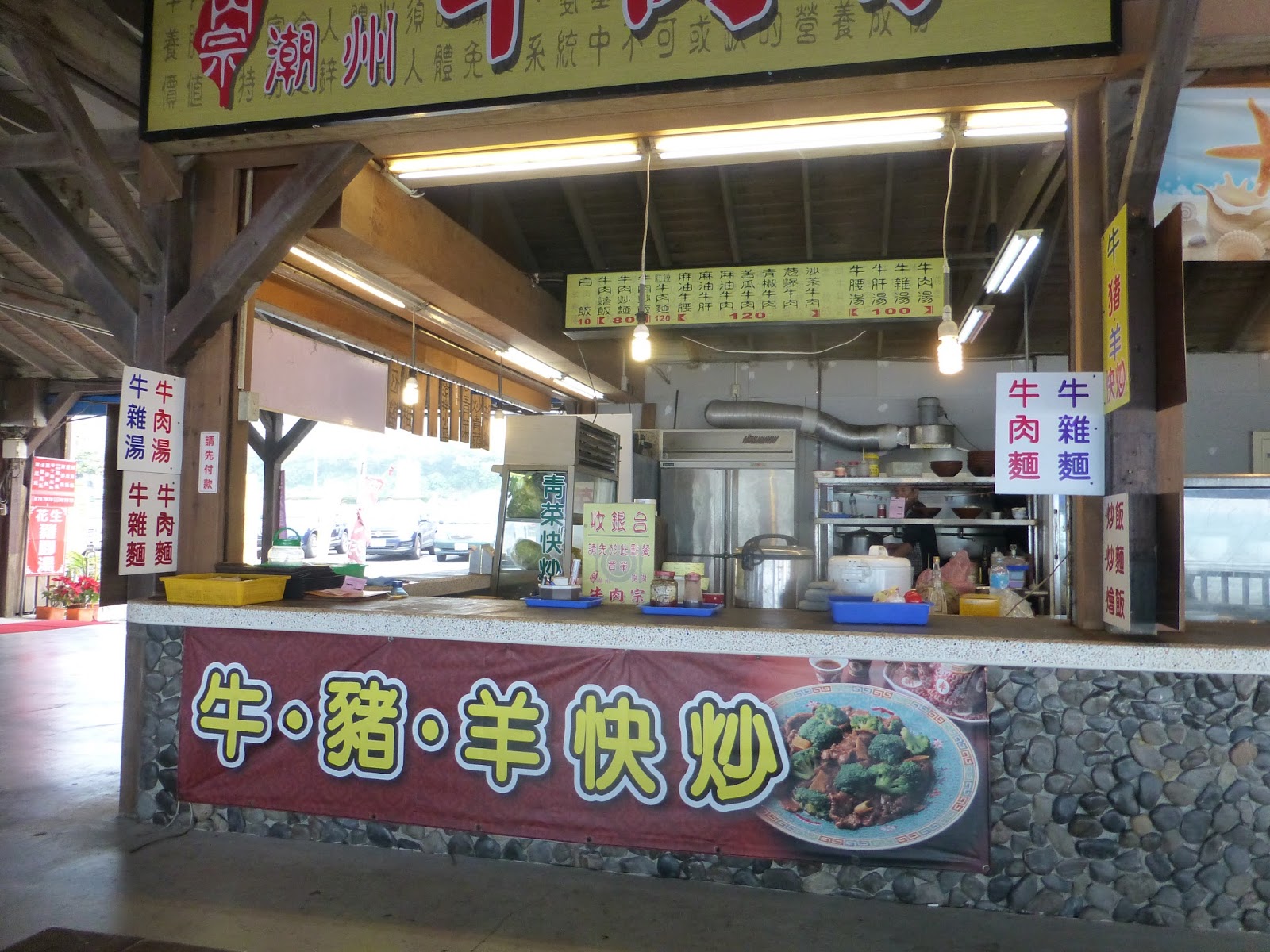
Lunch was taken at a simple beachside establishment which served the regional specialty of pig knuckle, accompanied by a hearty bowl of pig intestine soup. Both were quite good, particularly the tender knuckle, although I confess that enjoying a large bottle of Taiwanese beer undoubtedly improved the experience.


I spent the night in Taitung, known for its hot springs, and enjoyed the pleasures of a rooftop onsen. A musical group from the Philippines, singing in English, attempted to entertain a stoic gathering of tourists from mainland China. The musicians prevailed upon me to join in singing a few Beatles songs, which I'm sure the Chinese tourists found just fascinating.

The following morning, we continued along the coast and explored some astonishing coral and rock formations caused by shifting tectonic plates and erosion.


Sansientai is a stunning island dominated by three huge boulders, said to have been formed when three Chinese immortals chose the island as a place to rest. Linking the island to the mainland is the striking, undulating Dragon Bridge.


Tunghe Bridge was an interesting stop, both for the view and the opportunity to photograph some macaque monkeys.


Along the way, we stopped at a marker denoting the Tropic of Cancer
 

The Silks Palace Hotel, where I was to spend the evening, had been sealed off from the outer world by a landslide, so my evening was spent in Hualien at a passable hotel which, unfortunately, lacked a bar. I spent the evening strolling the busy, colorful city streets and enjoyed taking in the ever-changing street scene.


Taroko National Park

This stunning park is a highlight of any visit to Taiwan. Marble-walled gorges reflect the sunlight, while crystal clear streams wend between pristine rocks and boulders. A pathway, etched into the side of the cliff, affords beautiful views of a lush forest that is home to more than half of Taiwan's animal and plant species.


A highlight is the achingly beautiful Eternal Spring Shrine, constructed in memory of the workers who perished while building the road into the park.


We also visited the Buddhist Temple on the other side of the mountain.


Unfortunately, a landslide had closed off much of the road that winds through the park and we were unable to visit other notable attractions. Perhaps a reason to return to Taiwan someday...The drive along the coast, as we returned to Taipei along a winding road along the cliff face, was striking.


Hiroshima, Japan, and the Golden Shrine of Kyoto

I've posted on Japan before (November 13, 2010 and March 3, 2013), but had never visited Hiroshima. To stand in the shadow of the skeletal remains of the A-Bomb Dome, the former Industrial Promotion Hall near the epicenter of the nuclear explosion, is gripping.


Equally moving is the Children's Peace Monument, in memory of the children who died in the blast or from the effects of radiation. The monument was sparked by the story of Sadako Sasaki, a young girl who believed that she could survive the radiation that was slowly killing her if she folded 1,000 paper cranes. Sadly, she died. In her honor, classmates began folding paper cranes and, even today, children from around the globe fold and send the fanciful origami to Hiroshima.


The Peace Memorial Museum is a difficult visit. There are several displays of concrete and steel structures that were unbelievably warped by the blast, while other displays depict the devastating effect that the explosion or subsequent radiation poisoning had on the human body.  A very poignant exhibit is a simple tricycle. A young boy was killed by the bomb, but his parents couldn't bear to bury him so young and alone so they interned him in their own yard, with his bike. As the parents themselves approached their final days, they exhumed his remains and donated the tricycle, still charred and blackened, to the museum.


The Memorial Centograph represents a shelter for the souls of the victims.


A nearby Peace Flame will burn until the world is free of atomic weapons.

The Memorial Tower was built in the memory of the thousands of students who were mobilized to aid in the war effort, such as by farming or working in factories, and perished in the nuclear blast.


Hiroshima causes one to reflect on the horrors of any war and the bitter consequences often faced by civilian populations. To help balance these sobering and discouraging feelings, it helps to reflect upon the better side of humanity by recalling visits to two of Kyoto's most stirring sights.

Ryoan-ji, or the Temple of the Dragon at Rest, houses the famous Zen Garden of fifteen rocks. From any angle (other than aerial) only fourteen stones are visible at any one time. According to legend, enlightment can me achieved only if one is able to view all fifteen rocks at once.


                                                 The gardens are tranquil and beautiful


Finally, the Temple of the Golden Pavilion needs no words. The graceful arches and clean lines are striking and the gold leaf is meant to purify any negative feelings toward death. The pond and carefully manicured trees are achingly beautiful and the water is intentionally muddied to better reflect the golden hues of the Temple.