Tuesday, December 23, 2014

Machu Picchu

We caught the train from Cusco to Aguas Calientes, a town below the mountain ridge which the Inca selected as the site of the spectacular Machu Picchu.  We met our guide at the station and quickly boarded a bus to travel the dirt road, primarily a series of switchbacks, to the fabled lost city.  Machu Picchu was never plundered by the Spanish.  Instead, the Inca abandoned the citadel rather than see it fall to European hands, and nature reclaimed the intricate stonework.  Hiram Bingham, a Yale explorer known to everyone in Peru, is credited with 'rediscovering' Machu Picchu in 1911.  In fact, there is evidence of a prior visit by an Italian explorer and, at the time Bingham first visited the site, native people in fact lived there and farmed the stone terraces.


Aguas Calientes


Agricultural Terraces


When visiting an iconic attraction, I often wonder if it will live up to its billing.  After all, everyone has seen countless photos of Machu Picchu--would an in-person visit be a disappointment?  The answer: a resounding 'no'.  The ruins themselves are awe-inspiring and the setting, a lush, vertiginous mountaintop flanked by sheer drops to the valley far below, must be seen to be fully appreciated.   The only man-made structure I have personally visited that comes close to rivaling Machu Picchu is the Angkor Wat temple complex (see post of March 2, 2013), but I give the edge to Machu Picchu simply because of its glorious mountaintop setting.  I arose early one morning, to capture the mist slowly dissipating and gradually revealing the lost city.  The vision was jaw-dropping. 


I'll let additional photographs tell the rest of the story, as the photos are worth far more than any sentences that I can craft. 


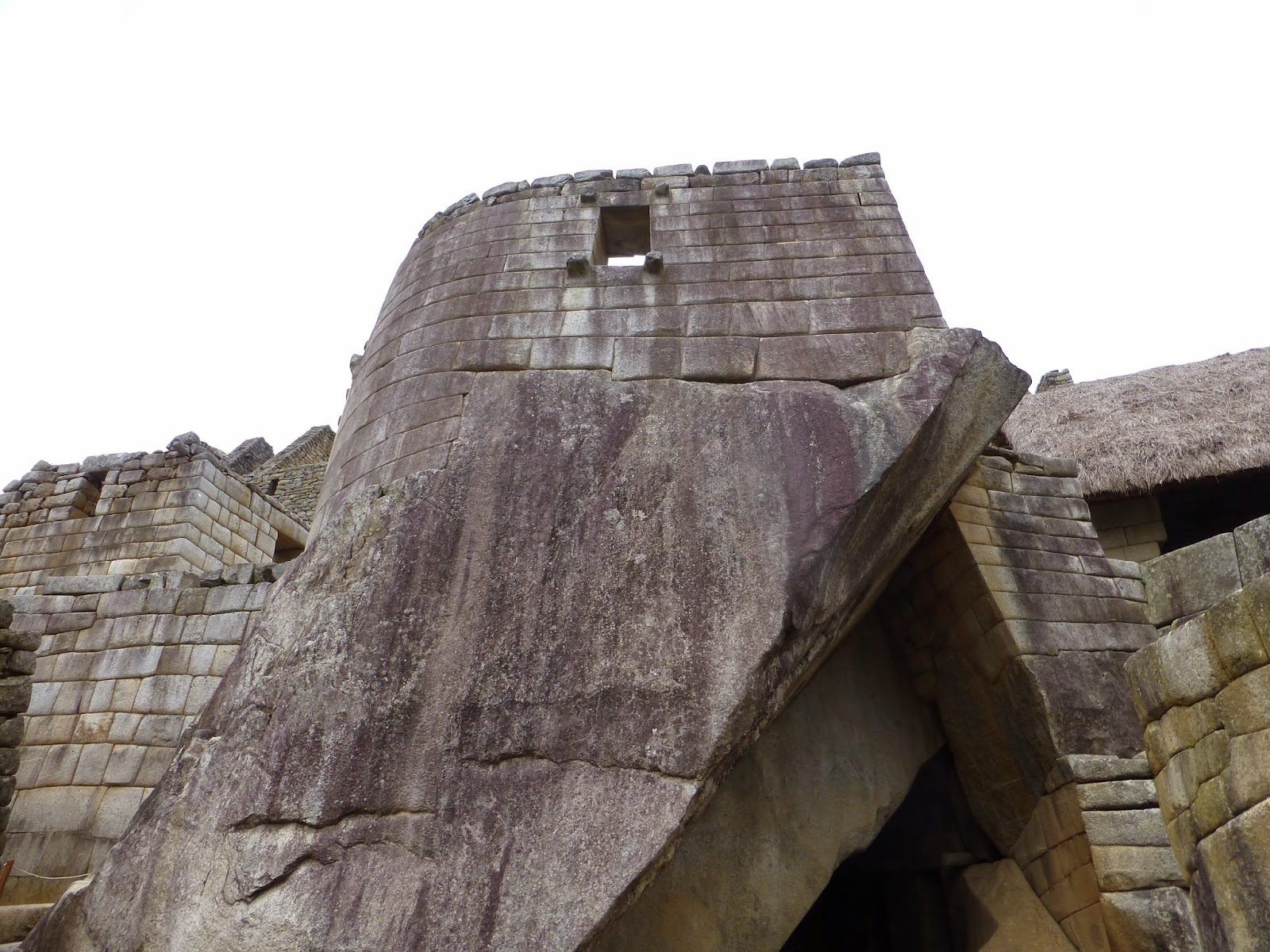
The Temple of the Sun--the window is aligned to the position where the sun rises on the summer and winter soltices


The Sacred Valley: Heartland of the Inca

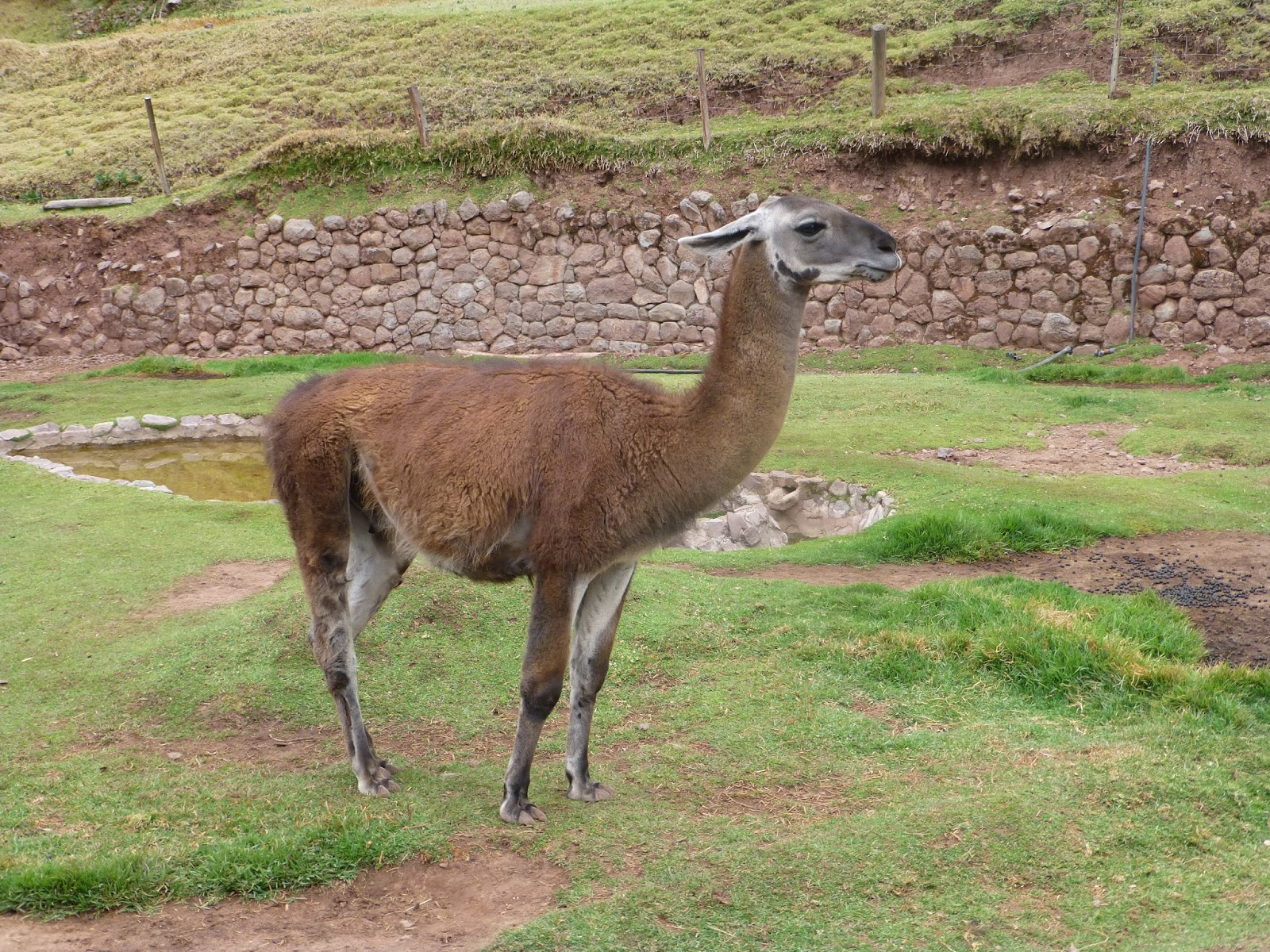
From Puerto Maldonado, we flew into Cusco and traveled by van to the Belmond Rio Sagrado, a sprawling property located on several acres bordering the Rio Urubamba.  Along the way, we stopped at an animal sanctuary featuring the camelid species--llamas, guanacos, vicunas, and alpacas--as well as the Peruvian hairless dog, pumas, and condors. 


The condors flew from one end of their enclosed space to the other, and were truly impressive in the air.  Weighing up to 33 pounds, a condor's wingspan can exceed 10 feet, second only to the albatross amongst all flying birds. 


The vicuna grows the finest wool in the world, but the quantity produced is so meager that the animal can be shorn only once every three years.  Because domestication efforts have been unsuccessful, the vicuna must be trapped in the wild.  Once endangered, the vicuna is now protected and the entire process of trapping the animal and shearing the wool is highly regulated by the government. 

We visited the colorful village of Pisac, with a traditional market that is now geared to tourism.  The coca leaf is legal in Peru and purportedly helps one adjust to the altitude--over 8,000 feet in the Sacred Valley.  We followed our driver through a seemingly endless warren of narrow, stone lanes until we found a local market and an elderly woman who sold us three baggies of leaves for about one dollar.  Of those in our party who chewed the dark green leaves, we all agreed that they helped adjust to the altitude.  There is no 'high' involved; it seems more akin to a subtle energy boost.


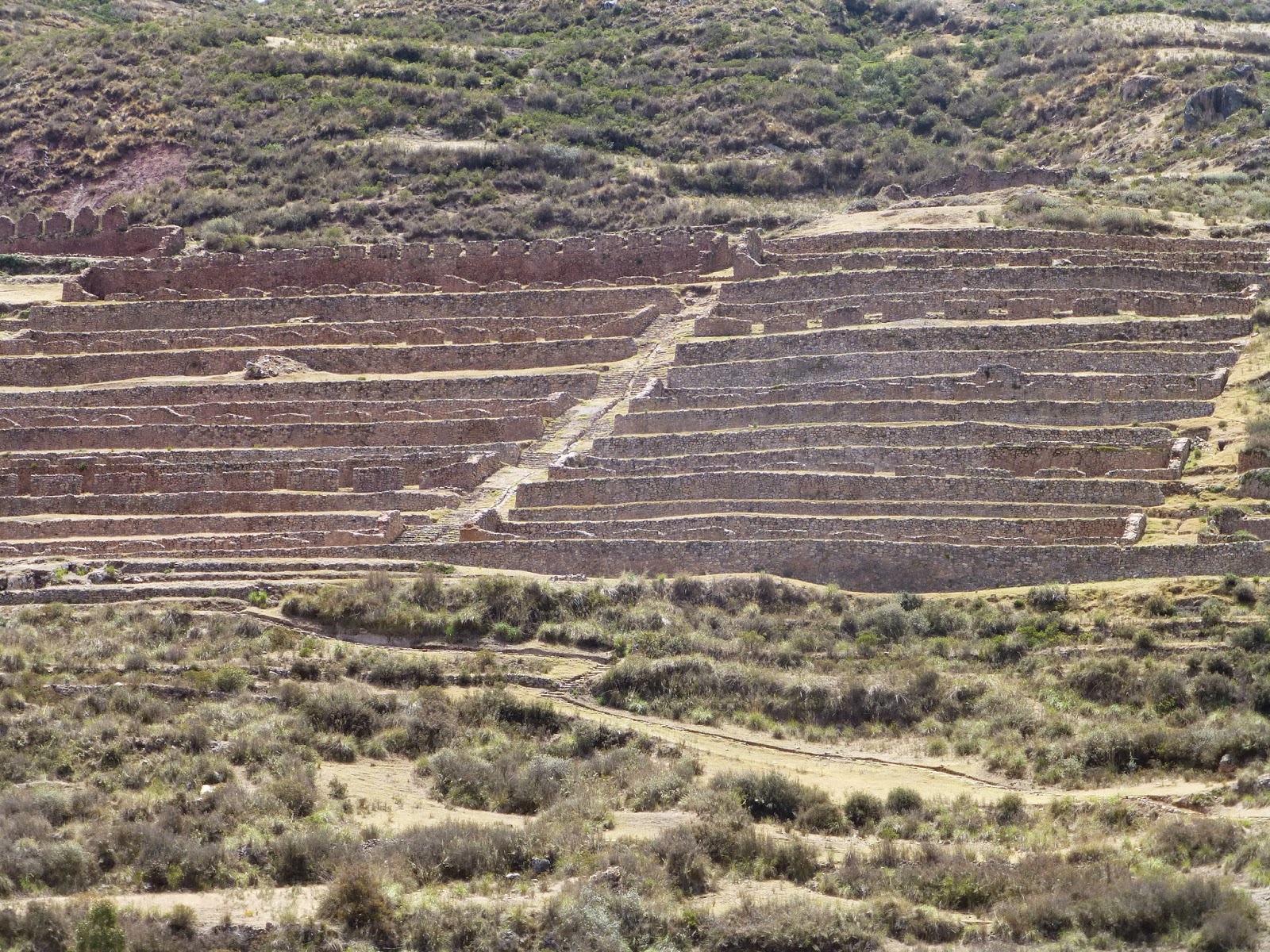
We also visited Chinchero, at over 12,000 feet, and viewed immense agricultural terraces constructed by the Inca that are still in use today.  The language of the Inca, Quechua, is still spoken by the locals.  Nearby is Moray, which resembles an amphitheater.  While some believe that the site may have hidden meaning, it clearly had an agricultural purpose and may have served as, essentially, a laboratory for the Inca to research the best growing conditions for certain crops by varying the elevation.


After an excellent buffet luncheon at the Parador de Moray ranch, we proceeded to the Salinas de Maras (salt mines), accessible via a serpentine road that winds along the face of a sheer cliff.  For thousands of years, salt water has been funneled into over 3,000 man-made wells to evaporate in the sun and hundreds of workers continue to harvest salt to this day.  The view from above is other-worldly.


We stopped at a small market, operated by a few families, and enjoyed a fascinating demonstration of how wool is cleaned, dyed, and woven.  Using only natural substances, an amazing variety of vibrant, rich colors are produced.  On the way back to the hotel, we stopped at a roadside establishment selling chicha, Peruvian corn beer.  We also played sapo, a popular game in Peru, which involves the attempt to toss a coin into the mouth of a large, sculpted frog.  Betting is encouraged, and I assume that amount wagered depends upon how much chicha has been consumed.  We tried both original and fruit-flavored chicha.  A little of each went a long way.


Dressed by our new Peruvian friends


Brewing chicha

 
Drinking chicha

Monday, December 22, 2014

The Peruvian Rain Forest

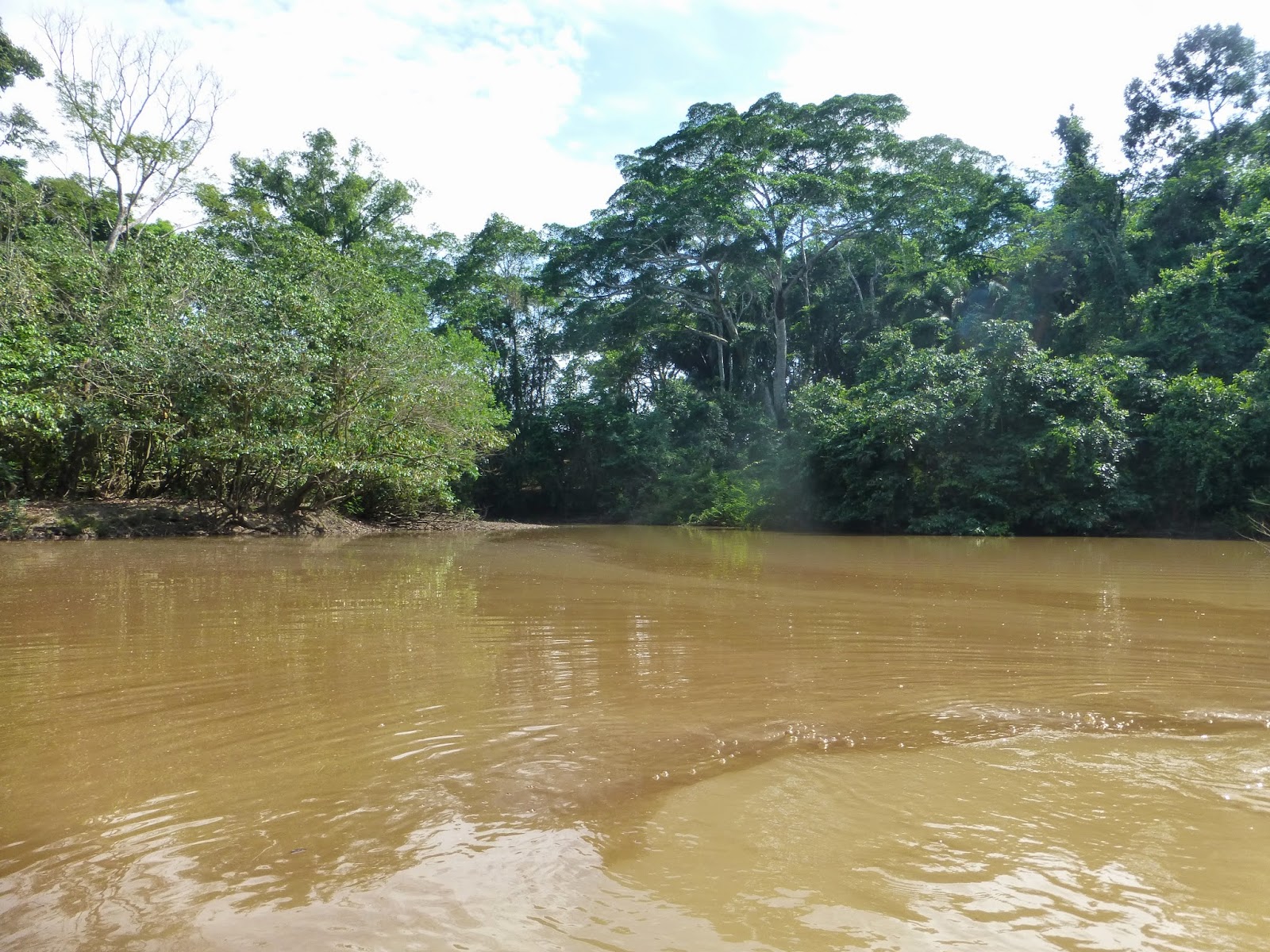
We flew into Puerto Maldonado and were transferred to a floating dock, accessible by a narrow plank with no railings.  We all managed to avoid an unplanned swim and traveled roughly forty-five minutes along the Madre de Dios river to the Inkaterra Reserva Amazonica, a well-appointed lodge in the midst of the Tambopata National Park.  Our wooden casitas were positioned along the riverbank and offered great views of the sunrise over the wide, sparkling river. 

 
Puerto Maldonado dock


The derivation of the river's name is interesting.  Our guide explained that the ironwood tree, indigenous to the area, contains enough iron to disrupt a compass and that early Spanish explorers/conquerors would become lost in the rain forest.  Only when they found the river would they have a chance of survival, and so it was gratefully christened "the Mother of God."


In the afternoon, we enjoyed a few chilcanos, a pisco cocktail made with lime juice and ginger ale, and took a boat ride at twilight, spotting both caimans and capybaras along the shore.  In the morning, we visited isolated Lake Sandoval, a gorgeous body of water that we reached via a boat ride followed by a nearly two-mile hike along a muddy, pitted trail.  It rained gently during our excursion and we welcomed the respite from the usually unrelenting tropical heat.  Although we did not spot any monkeys or anacondas, we did encounter the endangered giant river otter.  Later, we had the pleasure of meeting the resort's pet tapir, which was found alone in the wild as an infant and now makes its home on the grounds. 


Capybara

 
Caiman

Creek leading to Lake Sandoval


Giant River Otters

 
Caiman


A highlight of the trip was the Inkaterra Canopy Walkway experience, which involved negotiating a series of suspended bridges hanging approximately seventy-five feet above the forest floor.  Although we didn't spy any animals, the view of the seemingly endless sea of green was fascinating. Our day culminated with a cocktail hour on an expansive stretch of unspoiled sand to view the sunset.  Not only was the sky at dusk simply stunning, but we were fortunate to also have a full moon to illuminate the night sky. 


Enjoying our surroundings, with a fine cigar and a pisco cocktail


Hoping to spot an anaconda in the wild, we visited Gamitana Creek, accessible by boat from the lodge.  Instead, we encountered a few caimans, one over six feet in length, and a seeming flock of a colorful, inedible bird affectionately referred to by locals as the "stinky bird."  Following the creek, we toured a garden where native plants, trees, and orchids are cultivated.  The visit was eye-opening, as we learned of the medicinal purposes of many species.  We tasted one, used to relieve pain, and it seemed as though our mouths had been injected with Novocain.   Other plants could be mixed with liquid or simply rubbed on the skin to create bright colors. 

 
Gamitana Creek

 
Stinky Birds


We learned that the Brazil nut is harvested in the wild, as commercial production has not been successful.  The shell of the nut is extremely hard and, our guide claimed, more people are killed each year by nuts falling from the towering tree than are killed by jaguars.  The flowers of the tree can be pollinated only by a certain type of bee and is an interesting example of the fragility of life in the Amazon.  As mining, farming, and logging continue to encroach on the rain forest, the risk of losing species such as the Brazil nut remains very real.

 
A 'walking tree'--the roots will search out water, moving the tree over time

 
Even with a machete, it took some effort to hack through the shell


Our rain forest adventure concluded with a night tour of the jungle.  Venturing along a narrow, dirt trail, our path haphazardly lit by the narrow beams of flashlights, was an experience.  Conscious of snakes and spiders--and we spotted plenty of the latter, including a tarantula--each step was one taken carefully.  Every brush against a stray branch or twig conjured an image of something else.  We also saw colorful frogs that exude a poison through their skin; indigenous peoples dip sharp thorns into the poison and use the barbs as darts or arrows to paralyze game.  One member of our group, misunderstanding the guide's directions, darted off the path and into the brush.  He returned sporting several sharp thorns protruding from his shirt.  At one point, the guide has us turn off the flashlights and, with the canopy blotting out all starlight, we were immediately enveloped in pitch black. 

 
Tarantula
 
 
Brilliant emerald frog


After a nightcap (or two) in the main lodge, we adjourned for the evening to pack and prepare for the next leg of our trip: the Sacred Valley.