Saturday, May 10, 2014

Chicago: The Richard Driehaus Museum

 
Visiting the Richard Driehaus Museum, on the corner of Erie and Rush Streets, is an opportunity to step back in time and enjoy the splendor of a Gilded Age estate.  Commissioned by Chicago banker Samuel Nickerson in 1879, the house has been painstakingly restored to its original opulence. 
 
 
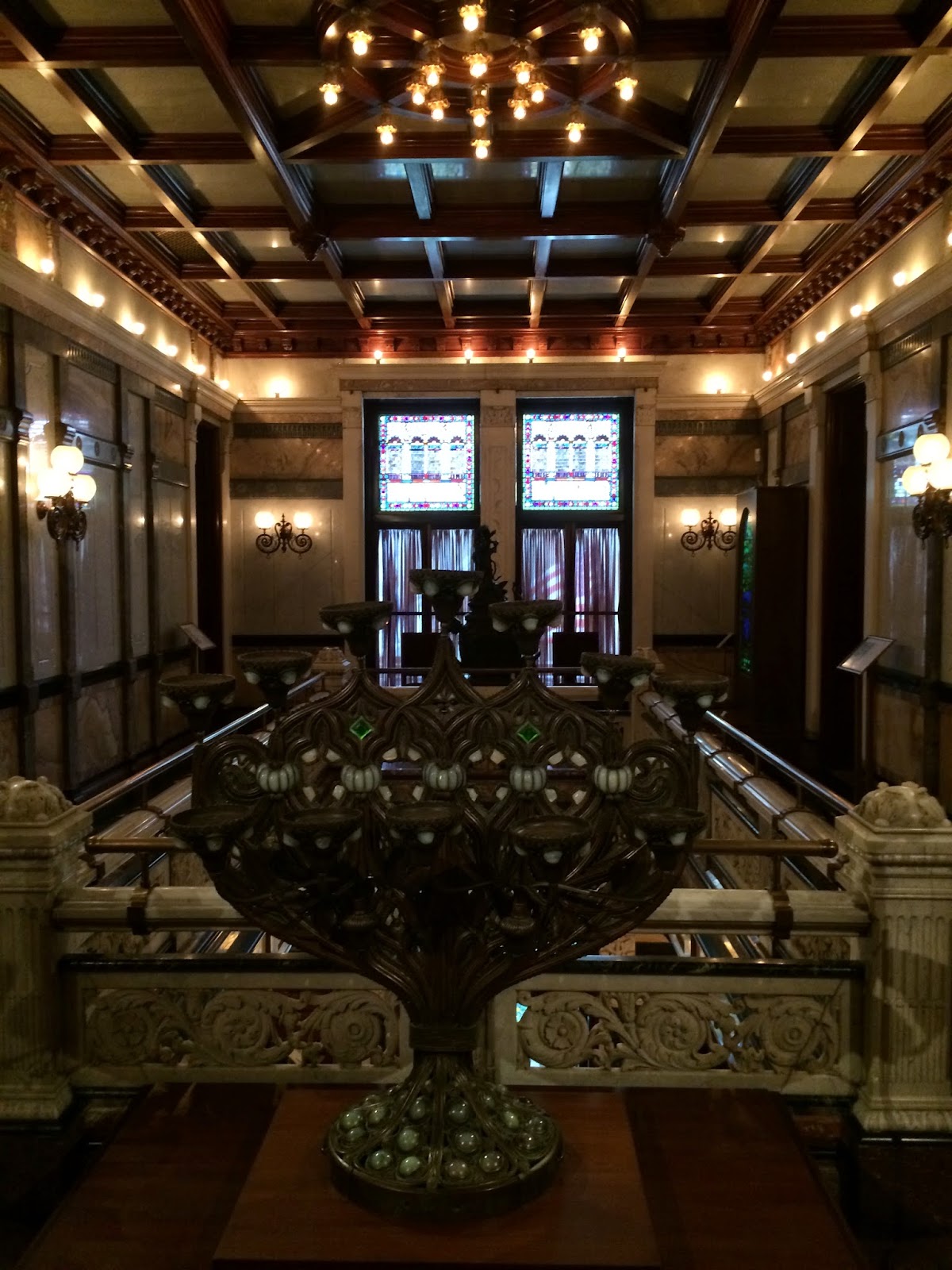
The Central staircase.  Floors, walls, and even many ceilings are of marble.  The home had fallen into some disrepair by 1919 and there was discussion of demolishing it to make way for another high rise.  When certain wealthy Chicago area families were made aware of this, they purchased the building and donated it to the American College of Surgeons, who used it as a headquarters for many years.
           Note the ornate woodwork.  The walls were covered with a material similar to laminate. 


The second floor.  In 2003, the mansion was purchased by noted businessman and art collector Richard Driehaus, who devoted the next several years to having the mansion faithfully restored.  It was opened to the public as a museum in 2008.


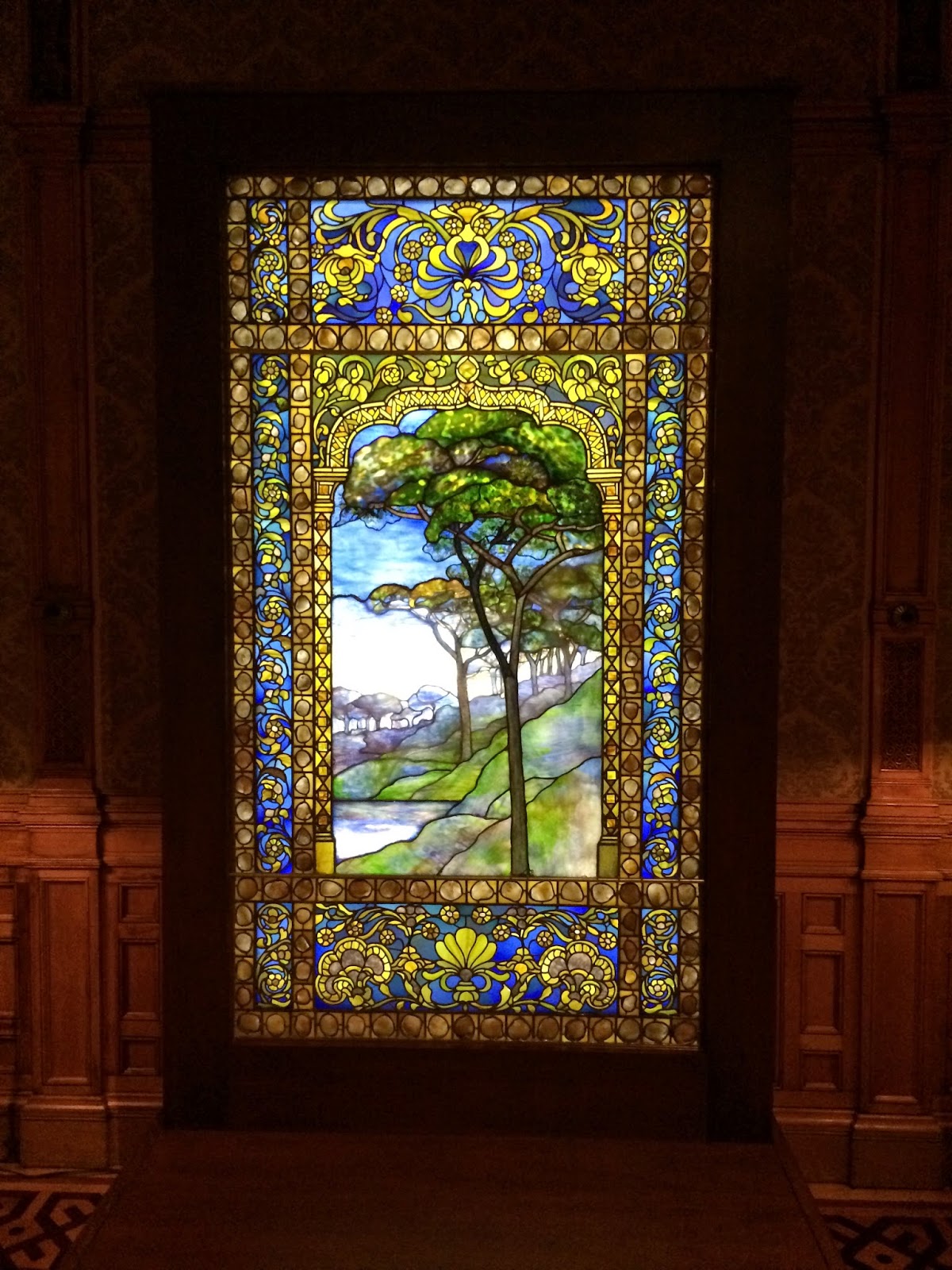
Although the Driehaus Museum holds several Tiffany pieces in the permanent collection, it's inaugural exhibition is Louis Comfort Tiffany: Treasures from the Driehaus Collection.  The piece above features individual Nautilus shells.  The lampshade was removable, allowing the work to serve as a centerpiece. 


It is not believed that the Rotunda is by Tiffany.  The Rotunda had been badly damaged but, incredibly, the manufacturer was found and still possessed the original formula used to make the glass.  The restoration is amazing. 
 
               Second floor from the opposite direction. Two rooms on either side of the central                  hall served as bedchambers.   A ballroom and lounge were located on the third floor.                    

                                            A Tiffany lamp with Tiffany's famed dragonfly motif. 


Hidden doors in the dining room allowed servants to pass from the kitchen or the parlor without intruding on the public space reserved for guests.


                                                Intricate ceiling work in the drawing room.

Exterior of the Mansion

Wednesday, November 13, 2013

Lisbon!

If Argentina built monuments for an empire that never came, Portugal built monuments for an empire that ebbed away.  Although Lisbon today is a vibrant, modern city, solemn monuments and abandoned castles bear witness to the days when brave Portuguese navigators launched explorations that spanned two-thirds of the globe.  The results of their discoveries remain evident today in a melting pot of people, unique architecture, and food imbued with flavors from India, Africa, and South America.


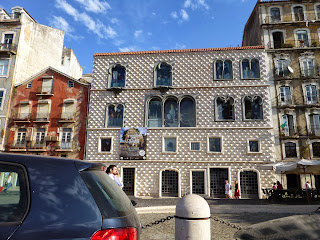
Lisbon is beautiful for many reasons.  Situated on the banks of the Tagus River, much of the lower town was destroyed in a cataclysmic 1755 earthquake that sparked flooding and fires and killed an estimated one-third of the city's populace.  A prosperous Portugal rebuilt the city in less than fifty years, constructing a modernized Lisbon, with better sanitation, sturdier buildings, and streets laid out in a grid.  Squares were erected, graced by elaborate fountains.  Black and white mosaic sidewalks, symbolizing Lisbon's flag, border streets and boulevards.  The 'upper town', or Bairro Alto, was not extensively damaged by the earthquake and retains a charm of its own, with narrow, twisting cobblestone streets that weave between old homes and eclectic shops.  And tiles--beautiful, multi-colored tiles are everywhere, adorning the façade of building after building.  Although some tiles have chipped or become faded, the overall effect is striking and unique amongst European cities.  Popularized during the Moorish occupation of Portugal before the 11th century, the tradition has thankfully endured.

The low area was destroyed in the 1755 earthquake and subsequently rebuilt.


With its numerous hills and steep climbs, Lisbon is reminiscent of San Francisco, California.  Heightening the similarity is the fact that the architect of the famed Golden Gate Bridge designed a replica which spans the Tagus.  Near the bridge, and creating a bit of geographic confusion, is a replica of Brazil's noted Christ the Redeemer statute.  We enjoyed this view from the rooftop terrace of our hotel, the Bairro Alto, located--of course--in upper town.  Near the hotel is the popular café, A Brasileira, and the dark, richly carved wooden interior reminded us of cafes we've enjoyed in Buenos Aires and Paris.  Outside the café is a seated statute of the famed poet Fernando Pessoa and a photo seated on the bench next to him is an obligatory tourist ritual.  Our first evening in Lisbon, we dined at Casa de Linhares, a restaurant known for its Fado shows.  Fado, with its haunting, mournful, lyrics is a captivating musical style.


We sipped a nightcap on the Bairro Alto's terrace and watched the ferry boats, their lights bobbing in rhythm with the Tagus, as they floated across the river in the twilight.


Tuesday, November 12, 2013

The Fabled Monuments of Belem

The historic heart of Lisbon is Belem, where the Tagus meets the sea.  From this point, Portugal's famed navigators--such as Vasco de Gama and Ferdinand Magellan--set sail into what was then labeled the "Sea of Darkness."  As astonishing riches flowed into the port, magnificent edifices were constructed in Belem.  Foremost amongst these is the striking Jeronimos Monastery.  Built to give thanks to the Virgin Mary for the successful voyage of Vasco de Gama to India, the Monastery is built in the flamboyant 'manueline' architectural style, named for the then-king, Manuel I, the Fortunate.  Manueline combines Gothic and Moorish architecture and imbues it with elements that reflect Portugal, such as boats and fishing nets.  While the exterior alone is striking, the Monastery was unfortunately closed the day of our visit and we were unable to visit the famed interior, which includes the famous Cloisters.


The Manueline-style Tower of Belem, perched right on the water's edge, was built in the 1500's as a monument to Portugal's Age of Discovery.  The monument's façade includes battered stone images of an elephant and a rhinoceros, both reputedly gifts to the Pope.  While the rhino drowned en route, the elephant survived.  These gifts faded into history until modern day excavations in Italy revealed mysterious bones that were tentatively identified as those of an unidentified dinosaur.  Only when researchers uncovered the legend of the Portuguese gifts did they understand that the bones were those of the elephant.


Unveiled in1960, the Monument to the Discoveries is a striking memorial built to resemble the prow of a ship and arches skyward on the riverbank of the Tagus.  Ramps on each side depict notable explorers from Portuguese history and, where the ramps merge, stands the figure of Henry the Navigator.  Henry, the third child of King John I and Phillipa, the sister of King Henry the IV of England, was noted for his role in developing the caravel, a ship that was much lighter and faster than other vessels then in use.  The only female depicted in the pantheon is Phillipa.


Map depicting Portuguese voyages and the different types of ships they sailed.


Sculpture based on the pilot's sextant


We visited the Pasteis de Belem, a pastry shop where the specialty is custard cream tarts.  They were supposedly developed in 1834, when the monasteries were closed and the clergy began selling sweets to support themselves.  Although we didn't sample any at the time, we strolled through the large and brightly-tiled shop rich with the aroma of custard and cinnamon.  As our tour drew to a close, we returned to the heart of Lisbon to rendezvous with our 'gastro guide' for an afternoon of eating and, hopefully, a little bit of drinking.