Tuesday, June 28, 2016

Borges and the Loire Valley

We paid a too-brief visit to Borges, on the way to the Loire Valley, but enjoyed an excellent dinner and an evening stroll through the old quarter of the city. The Petit Bourbon, the restaurant where we enjoyed our evening meal, is housed within the walls of a former abbey. Great food and a sublime setting were the perfect combination for a delightful evening.


                                                                 The Petit Bourbon


In the heart of the serpentine streets of the old quarter rests the Cathedral, the widest in all of France.


From Borge, we headed into the Loire Valley and a stay in Amboise. The Chateau Amboise, which dominates the city's skyline, is notable for its charming manor, beautifully landscaped lawn, and as the final resting place of Leonardo da Vinci.


Although many chateaus were closed due to severe flooding in the region, Chenenoux was open and we were able to enjoy the well-maintained rooms and grounds--albeit the raging Cher River had washed over large sections of the property, including the maze. Chenenoux has a fascinating history, including the fact that it straddled the border between Free and Occupied France during WWII. Many Jews and members of the French Resistance were smuggled to freedom through the chateau, despite the fact that German artillery was poised to destroy the fairy-tale like structure at any time.


We concluded our visit to Amboise by touring the  Clos de Luce, where Leonardo da Vinci spent the last three years of his extraordinary life. Interesting models of many of his inventions are on display, including one of a wall designed for defensive purposes that is strikingly similar to one we viewed near Cusco, Peru, that was erected by the Incans hundreds of years ago at Sacsayhuaman (see post of 12/13/14).


Model of "staggered" fortified wall

Monday, June 27, 2016

Provence, France

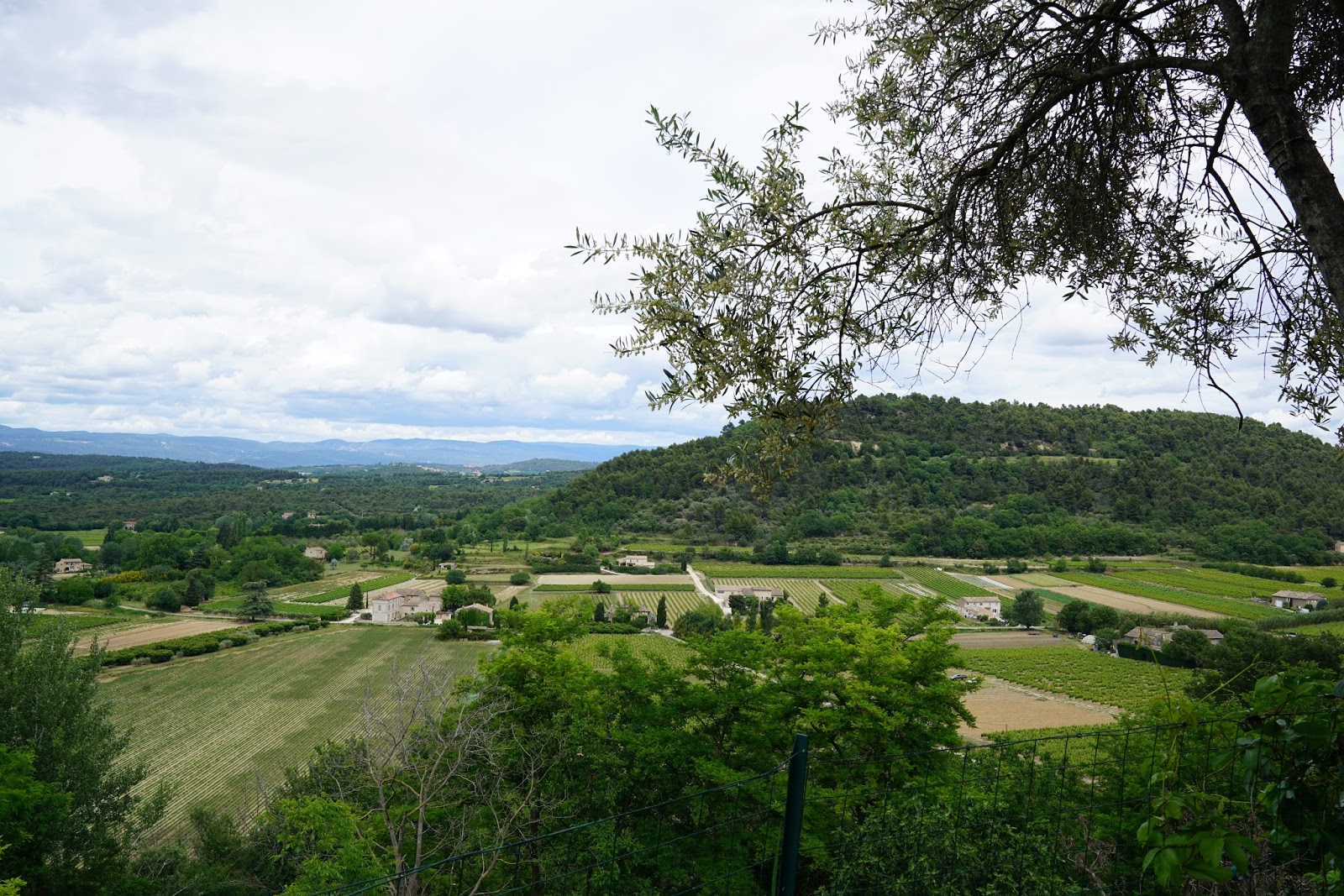
We stayed with friends in a villa on the outskirts of Maubec, a quiet, hilltop village with beautiful views of the farmland below. From our home base we visited, all too briefly, some towns in the region, including Oppede and Oppede-le-Vieux, a village abandoned more than a century ago.


                                                                           Maubec


Arles hosted a special exhibit of Vincent Van Gogh's works while we were in the region, so we spent time visiting what was a very nice collection and subsequently strolling the quaint, serpentine streets. Window shutters seemed to adorn nearly every facade. We unfortunately lacked the time to visit some of the city's other major attractions, but did enjoy a nice view of the expansive views over the Rhone.


                                                            Van Gogh Exhibit museum


We also visited Menerbes for a glass of wine, dessert, and beautiful views from the mountaintop.


                                                             View from Menerbes
A wine break in Menerbes


Avignon, France

Within the stout walls surrounding Avignon are several popular attractions, but none more so that the Palace of the Popes. When a French pope was elected in 1309, he determined to escape Italian intrigue and relocate to France where he would enjoy the protection of a supportive French king. The Catholic Church bought the then-village of Avignon and popes presided there until 1403. During that period, Italians insisted on a Roman pope, so the Papal Schism commenced in 1378, with twin popes based in Italy and France, and continued until 1417.


Today, the hulking palace complex conveys a sense of the enormity of the Church's presence in Avignon. There are sprawling ceremonial rooms, but more interesting are the living quarters where vestiges of colorful tiles and wall paintings remain. The original furnishings are long gone, either taken by the pope when he relocated to Rome or destroyed during the French Revolution. All in all, the complex conveys a wonderful sense of history during a fascinating time.


Sunday, June 26, 2016

Beaune, France

Beaune, the regional wine capital of Burgandy, is an eminently walkable little city featuring two squares, interesting shops, abundant restaurants, cafes, and wine tasting opportunities. And how can you say anything bad about a place where every restaurant features amazingly good snails drenched in a garlic/butter sauce?


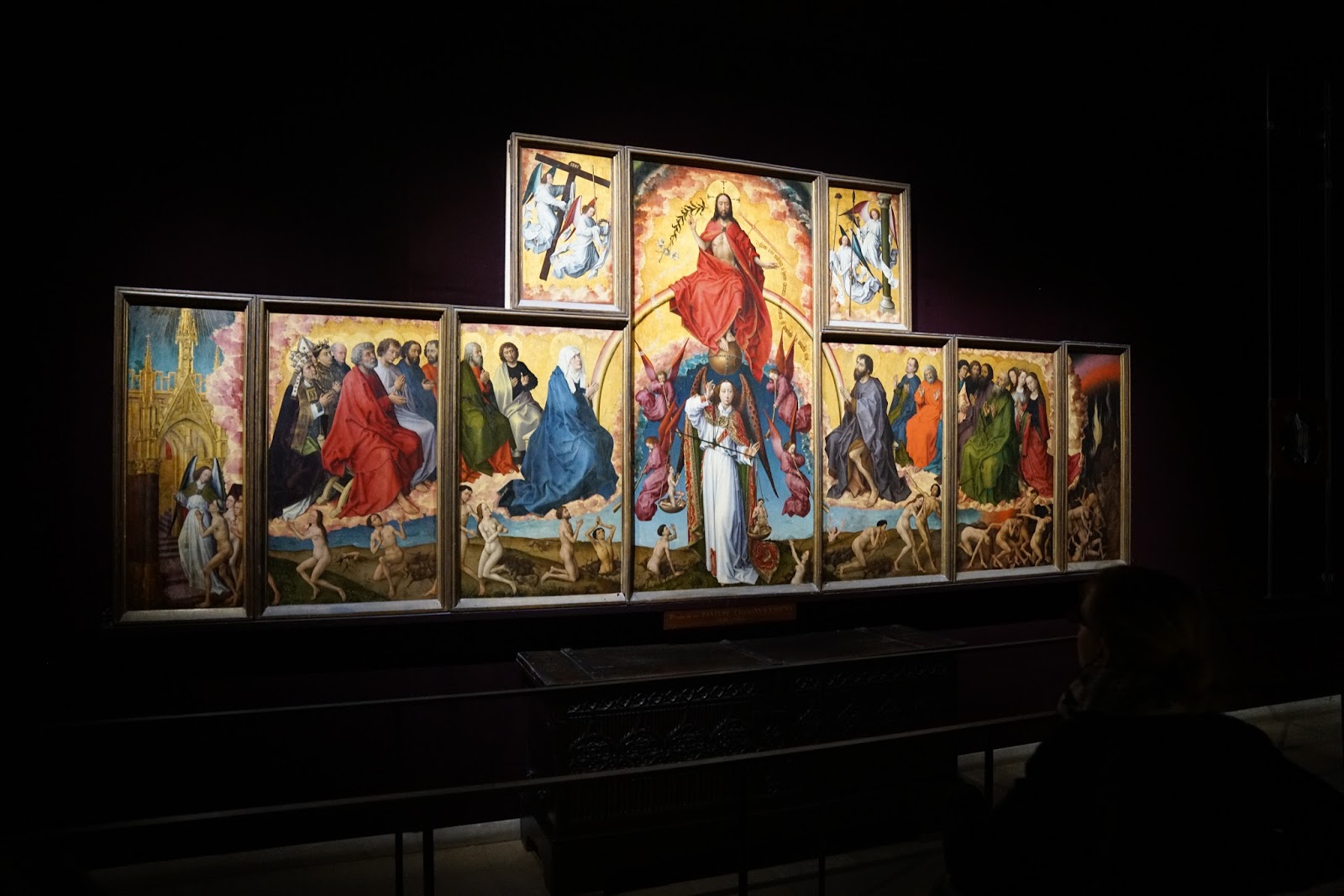
Perhaps the most interesting building in Beaune is The Hotel Dieu des Hospices, a former charity hospital founded in 1443, which did not close its doors until 1971. The exterior of the structure is magnificent, but the interior houses a variety of unique sculptures, ornate ceilings, and beautiful tapestries.The Last Judgment, by Rogier van der Weyden, a noted Flemish artist, is a famed altarpiece.


The beds look fantastic, until you learn that there were typically two patients assigned to each one!

Saturday, June 25, 2016

Reims, France

Front and center in Reims is the spectacular 800-year-old Gothic Cathedral, where 26 French kings have been coronated. Unfortunately, the famed Rose Window is being restored and our view was mostly obstructed by scaffolding, but the 500-foot-long nave does not disappoint. The stained glass windows, some of which were replaced after more than 300 bombs pummeled the Cathedral during WWI, are beautiful.


It was common for the roofs of gothic churches to be covered in lead and, when the lead melted during the bombardment, it flowed through the mouths of gargoyles that were meant to serve as rainspouts. Spared any shelling during WWII, the Cathedral now stands as a symbol of reconciliation between France and Germany.


We stayed at the Les Crayeres, a beautiful chateau nestled on 8 1/2 hectares just outside of the city. Once a private residence, the chateau houses a two-starred Michelin restaurant. After enjoying champagne on the patio, we moved on to a memorable meal in an elegant setting. Viva la France!