Friday, March 4, 2011

Catalonia!

Our guide, Lila, met us at the hotel lobby.  While we waited for Linda, I asked her if it was okay if I tried speaking with her in Spanish.  She said that would be fine, but seemed slightly hesitant. I found out why later in the day. 

The tour was great and we saw some fantastic sites.  Lila was very knowledgeable and loved sharing details of her beloved Barcelona with us.  We toured the Sagrada Familia, designed by the famous architect Gaudi, and marvelled at the fantastic details of the edifice.  Construction was on-going, and will be for some time, to judge by the ambitious plans for further expansion.  Some criticize these plans, contending that they far exceed Gaudi's vision, but none can deny that the ultimate effect will be more surreal than any other structure.  Like it or not, it is certainly something different and well worth a visit.

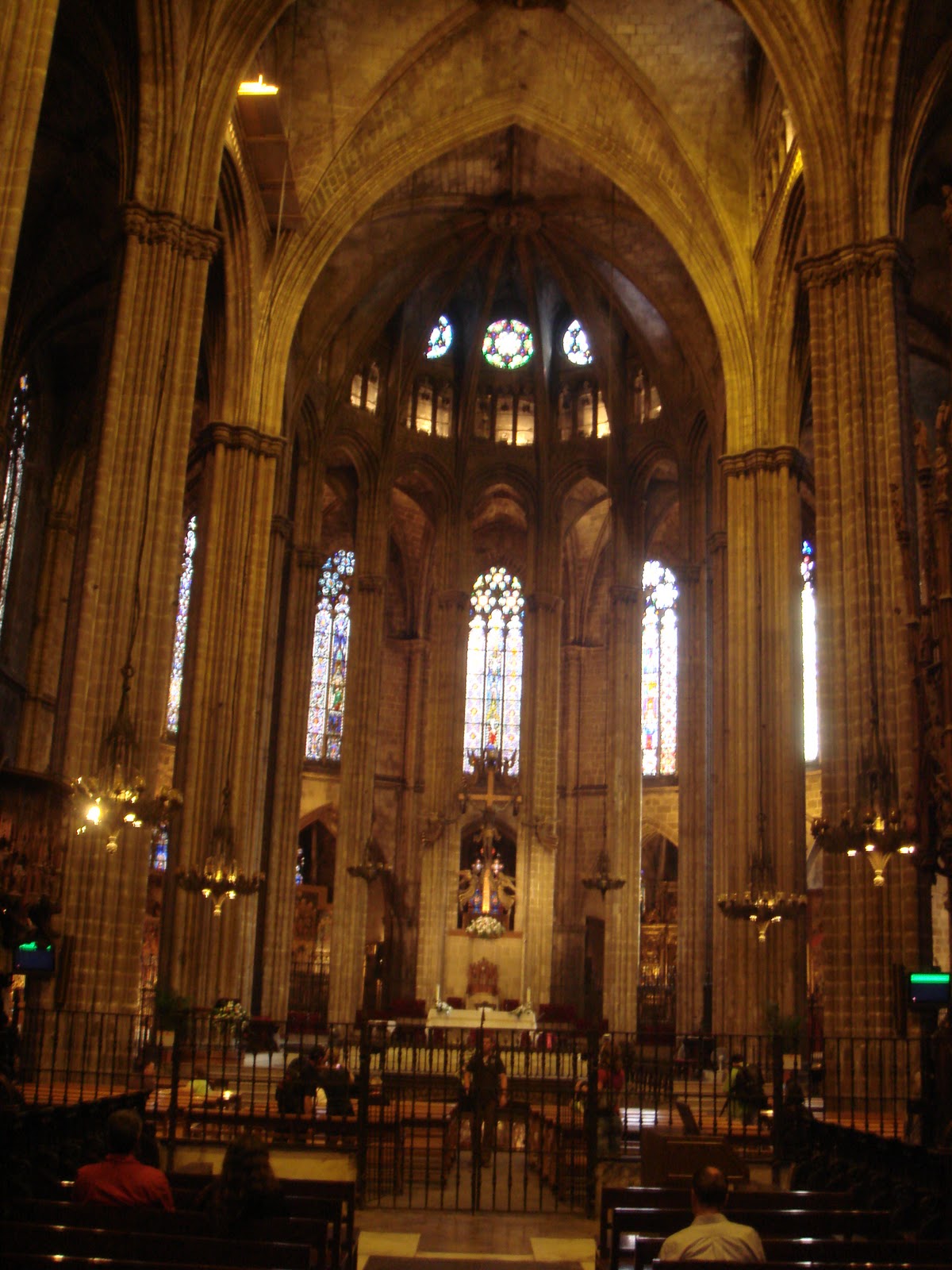
                                                              Ceiling and columns
So, too, is Park Guell, designed by Gaudi.  A sinuous multi-colored bench he designed, which wraps around a clearing in the park, affords stunning views of the City.  Walkways suddenly turn in to tunnels, with astonishing columns supporting the ceiling.  The park was full of families and tourists and carried a very festive atmosphere.


We lunched at the time-honored 4 Gats (Catalan for 'cats'), with tiled floors and dark panelling.  Four young artists established the restaurant and Picasso had his first exhibition there in 1900 at the age of 18.  Lila joined us for lunch and we talked extensively of the Catalonia's history and culture.  She explained that she was pleased to speak Spanish with me because I had asked politely.  Normally, she refuses to speak in any language but Catalan. She views the region as Catalonia, not really Spain except for the political affiliation, and believes that people should speak Catalan and not Spanish when in Catalonia.  For example, many Argentines immigrated to the Catalan region in 2001-2002 when Argentina was experiencing its economic crisis.  Lila will not speak Spanish with them--if they settle in Catalonia, she believes it is there obligation to learn Catalan.

They teach little Spanish in Catalonia's schools, a sharp contrast to the days of Franco when he repressed all things Catalan.  Signs are  typically bilingual or in Catalan.  It is an interesting language, with ten vowels.  Lila noted that it is not related to Basque, which is incomprehensible to them.  There is also a fourth common language in Spain, Galicean, near Portugal, but it is really a romance language and not a Portuguese dialect.

Fortunately, we were in Barcelona as the Festes de la Merce began, an annual festival unique to the Catalan region.  Huge wooden costumed figures are paraded through the streets and performances and contests abound  I visited the Plaza San Juame (St. James Square) in the middle of the Gothic quarter--a truly fascinating section of twisting, narrow, cobblestone streets--and watched the castellers compete.  The idea is to form human pyramids as tall as possible and it was amazing to watch the men interlock arms as other climbed atop them to, again, interlock arms while a third layer clambered aboard.  They would reach 6-7 stories high, with young boys being the last to make the dizzying climb to the top.  One pyramid collapsed as we watch, the crowd gasping, but they all seemed to slowly tumble in a heap and no one appeared injured.  The entire contest has a medieval feel to it as each team wears uniforms of different colors and all parade before the crowd, packed into the aged square, prior to the competition. 


Lila introduced us to carajillo, a coffee flavored with brandy.  The same concoction with milk is called a trifasico.  Either one is a magnificent way to end a lunch.   The meals in Barcelona were memorable and I'll mention a few restaurants of note: Alkimia was and we had a multi-course meal that exceeded expectations.  Cured ham paired with a glass of olive oil, mussel soup with cheese, pickled oyster with spinach and pork cheek, caviar atop bone marrow, a soft-poached egg bonbon, shoulder of young lamb--how we ate it all I'll never know.  We ended with dessert of black chocolate with rum and raspberry cream, over coconut ice cream.  This was paired with a Pedro Ximenez Tradicion Jerez, a dessert wine that tasted almost like Kahlua. 

Another restaurant not to miss is La Dama, one of those rare restaurants where the setting is as spectacular as the food.  Housed in an art deco building, the details are truly spectacular.  Don't miss the art deco elevator in the lobby which is a gleaming design of pure whimsy. 

The final restaurant I'll mention is Los Carrcoles, established in 1835.  The dark wood and mirrored bar is decorated with slabs of cured ham strung from the low ceiling.  The small dining room has colorful tiles on the walls and a dark, beamed ceiling.  Food was great, including a delectable serving of razor clams.  For dessert, we ordered trifasico and they left the bottle of rum on the table for us to pour as we pleased. 


Our final two tourist sites were the Tidabo, a mountain looming 1600 feet over the City and providing a beautiful panoramic view.  Tidabo was the location of the 1992 Summer Olympics and the buildings constructed then, such as the pool, are now devoted to civic use.  We then toured the magnificent Cathedral, reminiscent of Westminster Abbey, particularly with respect to some of the ceiling architectural details.  The choir area is stunning and we enjoyed the pond in the courtyard, with its swans and turtles, as well. 


Monday, February 7, 2011

Barcelona

We spent three days in this lovely city while awaiting the departure of a Silverseas cruise through the Mediterranean.  Barcelona, the second largest city in Spain, sprawls from the sea into the Iberian peninsula.  The extended and popular beach, voted the best urban beach in the world, seems to stretch forever and lends big city Barcelona a resort-like flair.  We stayed at the Hotel Arts, perched right above the beach, and enjoyed stunning views of both the city and the sea from our room.  The Hotel is strikingly modern, with abundant sculptures both indoor and out, and the dark bar, its walls lined with mirrors, faces a tiered stone fountain decorated with dwarf palms. 

Having practiced my Spanish for weeks before the trip, I couldn't wait to order our first drinks.  Of course, I had rehearsed exactly how to order our vodka martinis--up, very dry, with a lemon twist--and was flabbergasted when the waitress didn't understand a word.  Fortunately, I learned that it was only her second day on the job, she was from Italy, and spoke not a word of Spanish.  We enjoyed cocktails as well as tapas, including our first taste of Jamon de Bellota.  Made from pigs that are raised on a diet of acorns, the ham is so delicate it melts at room temperature. The flavor is incredible.  It is said that when the Japanese first experienced the ham, they created a word for it because it tasted like nothing else.  Linda and I made it a point to have a taste every day.  Typically, it is served with a bread rubbed with salt, olive oil, and tomato that is said to be unique to the region.  We were told it was created as a way to make stale bread taste good.  Worked for me.

Linda and I strolled the first day, deciding--at my recommendation--that we walk to the storied La Rambla street and see the sights.  Of course, I misread the map and led us into the worst area in Barcelona.  The streets were dirty, small and dark bars were well occupied at 11:00 a.m., and we were the only tourists in sight.  I kept remarking how wonderful the 'local color' was but Linda wasn't buying it.  People I stopped for directions seemed less than helpful.

 Eventually, however, we emerged from the twisting streets, made our way to wide Colon Avenue, and found La Rambla.  The pedestrian-only street is a kaleidoscope of people, sidewalk cafes, vendors and street performers. In older times, sections of the street were reserved for certain types of products.  For example, there might be an area where all the purveyors of candy would converge.  Only vestiges of that remain now, such as an area where the sellers of birds congregate--the cages, stacked atop one another on the road, are full of colorful plumes and raucous cries.  We stopped for a drink and watched the street performers, then continued on and visited the sprawling Central Market which abuts La Rambla.  Food stands of every type abound, along with restaurants and bars interspersed between the stalls.  Following lunch, we visited some of the shops and continued our stroll along La Rambla.  The street ends at a large traffic circle and we enjoyed a cocktail, accompanied by succulent anchovy-stuffed olives, and watched the world go by.


We had no dinner reservations for the evening, so I asked an employee at the hotel where he would take his family for tapas.  He directed us to the Ciudad Condal, which is the old name for the city itself, and steered us right.  The establishment itself is striking, with cherry-panelled walls and recessed lights.  A huge bar and counter stretch the length of the first floor, and all manner of tapas are arranged behind glass that rims the counter top.  While the restaurant is certainly not tourist-free, and an English menu is available, I would guess that locals outnumbered tourists 9-1.  Even on a Monday night, there was a half-hour wait for a table, but it was well worth it.  We had an assortment of olives, ham, shrimp, clams, squid, salmon, and perhaps the best calamari we've ever tasted. 

We closed the day with a nightcap at the Hotel and looked forward to the next.  We'd arranged for a guided tour of the City but I'll save that for the next post.  Suffice to say, we not only saw Barcelona, but learned something very important:  we were in Catalonia, not Spain.

Monday, January 17, 2011

Uruguay and a word about Mate

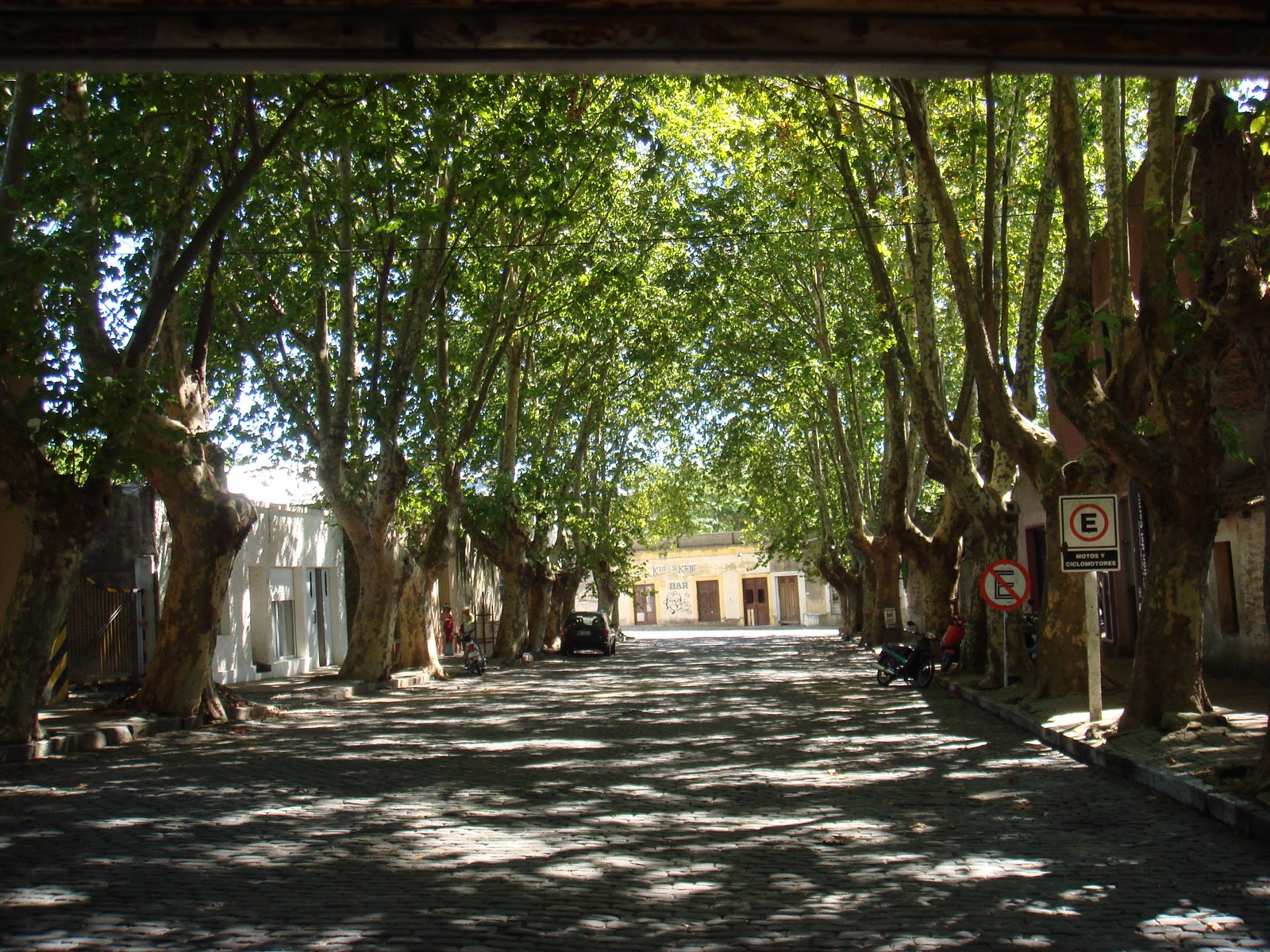
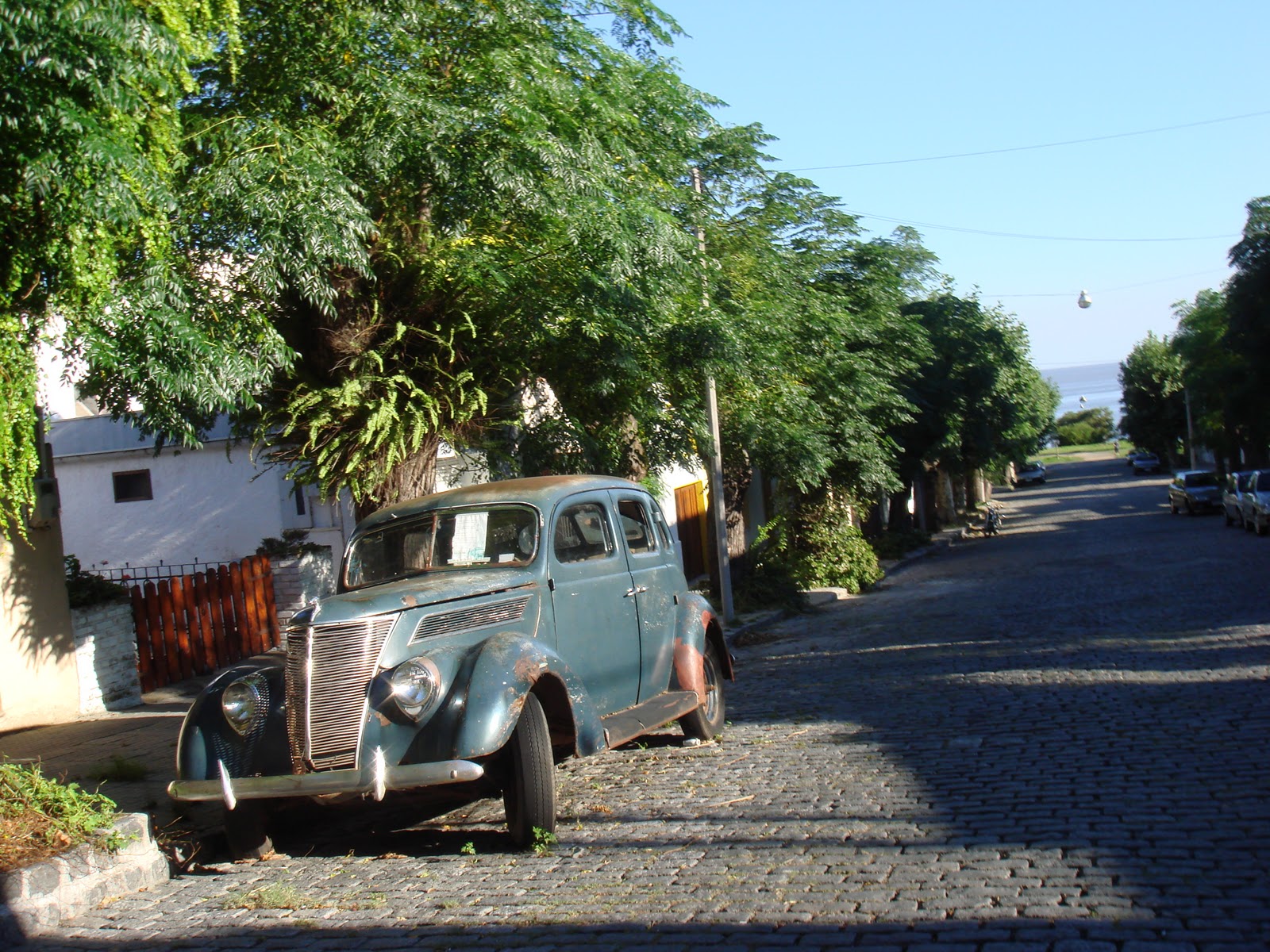
We made two trips to Uruguay from Argentina during our trip.  The first was a day trip, by ferry, to Colonia del Sacremento, a former Portuguese colony established in 1680 and now designated as a World Heritage site.  We rented a golf cart at the pier and spend a delightful afternoon exploring the area.  The wide streets were lined with huge, leafy trees that provided abundant shade.  The buildings, many of which showed their age, looked as though they had been plucked from some European community.  We took the cart up a steep hill just outside the town and enjoyed a beautiful, nearly deserted, beach.  Late afternoon, we returned to the pier to board the ferry to Buenos Aires.


Surprise!  The ferry had left.  No one told us that there was a one-hour time difference between Argentina and Uruguay during the time we were visiting.  Luckily, there was one more ferry which would depart early evening, so Linda and I did our best to turn a lemon into lemonade.  We reclaimed our golf cart and headed to the Yacht Club to wile away a couple of hours.  There was an open table outside on the deck, and a young tuxedo-clad waiter promptly took our order for a couple of martinis.  Unfortunately, he--or the bartender--had an unwarranted affection for vermouth.  Our waiter's brilliant solution to making sure we had the cocktail we wanted?  He wheeled a cart to our table with a bottle of vodka, vermouth, olives, lemon, ice, and chilled glasses.  We had a make-your-own martini fiesta while watching a brilliant sunset over the harbor.  Neither of us regretted missing the earlier ferry, although I confess that my ability to navigate the golf cart may have been somewhat impaired when we finally departed.  At least, I think I drove.


Our next excursion to Uruguay was at the end of our trip.  We flew into Montevideo, the capitol, intending to spend a night before heading south to the popular resort area of Punta del Este.  We had arranged for a driver to meet us and take us to the hotel we'd booked downtown.  At the airport, we spotted Air Force One and were reminded that President Bush was visiting Uruguay at the time.  Uruguay has a democratically elected socialist government, and one that is on good relations with the United States.  We headed downtown only to discover that our hotel was cordoned off--the President had, essentially, taken it over.  Our driver spoke to a guard--I don't trust my Spanish enough to try and communicate with men carrying guns--and explained the predicament.  The guard called for someone to relieve him, took our passports, and said he would accompany us to the front desk.  I wasn't feeling particularly good about our prospects for a room.

The staff at the front desk advised that they were sorry they had been unable to reach us (I don't think anyone ever tried) but that they'd arranged for a room at another hotel downtown, called the Crystal Palace. Linda was rather insistent that we be given the room we had booked but, as I gazed about a lobby overflowing with secret service agents and local security personnel, all heavily armed, I discouraged any argument.  The driver drove us to our new hotel and I learned that Crystal Palace translates into 'hellhole', or some similar term.  The location was in a rather seedy area of Montevideo and the room had a distinctly musky aroma reminiscent of moist gym socks.  Our solution was to ask the driver if he'd take us directly to Punta del Este, about an hour and a half drive.  He agreed, and we left behind President Bush and the Crystal Palace.

We called the Hotel Conrad, where we'd arranged to stay, and confirmed we could arrive a night early.  The Conrad is a venerable hotel/casino that receives mixed reviews from travelers.  I would recommend it for first-time visitors to Uruguay.  Most of the staff speak some English, it has the amenities of a large hotel, and a central location within easy walking distance of beaches and shopping areas.  The hotel's own beach is rather small, but it has a large outdoor pool. 


Punta del Este was a great place to visit.  It is THE place where wealthy South Americans, particularly Argentines, go for summer fun.  The town is situated on a peninsula bounded by the Atlantic on one side and the wide expanse of the Rio de la Plata, which separates it from Argentina, on the other.  Beautiful sand beaches rim the peninsula.  We were there in September, when the summer crowds had dissipated, but the weather was still great and we had no trouble finding seats in any restaurant we wanted.  Like Argentina, Uruguay is a country populated with people of European descent--88%. mostly Italian and Spanish.  Also like Argentina, this influence shows up in their food and we had some spectacular Italian cuisine during our visit.  One tiny spot, Scarlett, overlooking the ocean and decorated with posters featuring Gone With the Wind characters, served a delectable black squid ink pasta. 


Some things about Uruguay really stood out.  First, it is a tiny nation.  The total population, of which more than half live in Montevideo, is about 3.5 million.  Indeed, they don't have street addresses in Uruguay.  You give your house a name--say, 'House of Flowers', and your mail will be addressed to House of Flowers, Main Street.  They have an affinity for old American cars, like Packards, and you'll see a few of those tooling around. They view Argentina as an arrogant older brother and debate which country makes the best dulce de leche or consumes the most mate, per capita.


yerba plant are ground and hot, nearly boiling water, is poured over them.  The tea is then consumed from a gourd through a straw.  Any visit to an Argentine home commences with the passing of the mate gourd, from person to person, all using the same straw.  Only after mate is consumed will any other beverages be offered.  Some of the gourds are quite ornate, decorated with silver, for example, and are often passed down from generation to generation.  In the mate consumption contest, however, I give my vote to Uruguay.  People drank mate everywhere, and most gas stations we saw had a machine that would dispense hot water so people could replenish their mate cup, gourd, or whatever they'd be drinking from. 


We drove the coastline away from Punta del Este on our final day in the country and saw some truly fantastic scenery.  Miles of deserted beaches, a few charming small communities and, inland, a verdant landscape of gently rolling hills.  Our sharp-eyed driver spotted a tarantula in the road and stopped for a bit so we could observe the creature first-hand.  We were content to keep our distance as the tarantula eyed us warily but held his ground until we departed.  We continued through vast expanses of range--like Argentina, cattle is king--and returned for a final night in a charming country.  Over a steak dinner, we enjoyed a bottle of tannat wine, a grape which we understand is grown only in France and Uruguay, and rued the fact that our trip was rapidly drawing to a close.

The famous Punta Del Este hand sculpture on the beach.
The sway back bridge.


This museum-restaurant-hotel was hand built by the famous Uruguayan artist, Carlos Paez Vilaro


We drove to Montevideo the next morning, with time to stop at the famed Central Market for lunch.  I enjoyed my last chivito, a sandwich consisting of thinly sliced steak, ham, egg, olives and cheese.  The sandwich alone is worth a trip to Uruguay albeit it may also cause a trip to the cardiologist.


We spent our last night in South America at the new Park Hyatt, and it was spectacular.  Easily the best Park Hyatt we've seen, constructed in part by incorporating the former palace of a wealthy Argentine family.  The ultra-modern rooms, with state-of-the-art technology, contrasted with the ornate marble floors and European sculptures that decorated the common areas.  We regretted that we'd be spending only one night.


Our flight came too early the next morning and we had our last look at Buenos Aires as the cab took us to the International Airport.  Someday, I promised myself, we'd return.  As I write this, it is impossible not to miss the passion of the tango, the richness of the culture, the stunning beauty of waterfalls, of sunsets, of the people themselves.  Yes, someday, for another sip of mate, a taste of dulce de leche, a meal of steak and malbec and, most importantly, to see a friend from long ago.  A combination that makes a journey one to savor.