Monday, February 13, 2023

Ranthambore National Park

 Approximately 100 miles south of Jaipur lies the sprawling Ranthambhore National Park, nearly 400 square miles of game reserve and home to the endangered tiger.


Once the private hunting grounds of the royal families of Jaipur, dramatic ruins dot the landscape.


                                          Birds are prevalent--and some tagged along for the ride!


I was extremely lucky to see a tiger on both my morning and afternoon game drives. The odds are not good under the best of circumstances, and I was the only one from my game lodge to see these majestic animals.

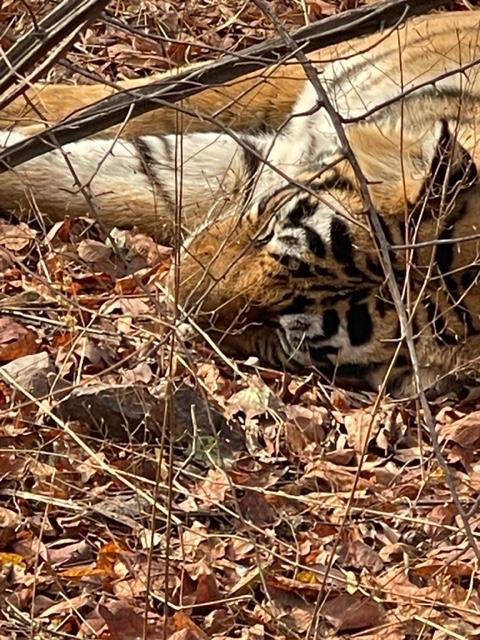


Other wildlife is abundant, such as the monkeys, spotted deer, and large Asian deer below.


                                    The Sujan Sher Bagh is a beautiful lodge with great amenities.


Rural Life

 Camels are a common sight in rural areas.


And so are cattle--although they are viewed as sacred and can be seen virtually anywhere.


Jerry-rigged vehicles, technically illegal, are common in rural areas where there is scant law enforcement.


A common sight in every village are cow patties, used for fuel, heating, and insect repellent. They are stored in a variety of structures, such as the hut below, to protect them from the rains. Sadly, snakes will also seek shelter in the huts when the monsoons come, and bites are common.


Jaipur--The Pink City

 The Jai Mahal Palace, below, is typical of former Maharaja residences which have been transformed into stunning hotel properties. Built in 1745, and former home to three princes, the hotel is nestled in the midst of 18 acres of Mughal gardens.


Jaipur is also known as "The Pink City". In the 19th century, Prince Albert of England visited and the yellow buildings were repainted pink. Even today, all buildings in the old city must be painted that color.


A visit to the morning market was a true glimpse behind the scenes of how the city awakens. Every day, flowers, fruits, vegetables, and animals are transported into the sprawling market.


                                A morning religious ceremony at one of the many temples in Jaipur.


                            The iconic Hawa Mahal, built from red and pink sandstone in 1789.


                                                                   Hand-fashioning copper.


The best known lassi place in Jaipur--served in disposable clay cups, as it has been for generations. A delicious, yogurt-based beverage.


                    A notary public in Jaipur. Note that they traditionally use old-fashioned typewriters.


Jaipur--Jantar Mantor Observatory, City Palace, and the Rambagh Palace

 Jantar Mantor observatory is a fascinating site to tour. An observatory constructed in 1726, the solar instruments are remarkably accurate and capable of measuring complex data to perform functions such as locating stars and predicting eclipses. The complex is also beautiful, as the structures resemble modern abstract works of art.


                                                           The largest sundial in the world.


City Palace, the official residence of the last Maharaja, whose family still resided in the complex.


The Mubarak Mahal, or guest pavilion, houses a wonderful collection of brocaded garments and silk attire.


The giant silver vessels in the Diwan-i-Am, or Hall of Public Audience, were used to transport holy water when the Maharaja visited England.


The Rambagh Palace Hotel, a former palace, is typical of the former palaces that have now been converted to hotel properties. Well preserved, a sense of grandeur still drifts through the grounds.
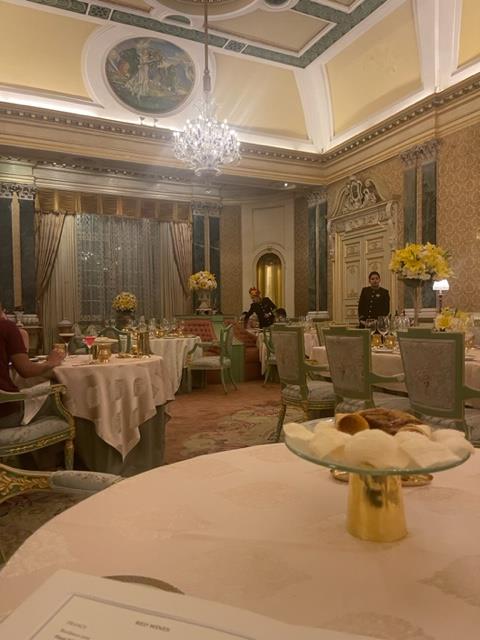


When the Maharaja was in residence, a single table for eighty people graced the dining room.