Monday, January 17, 2011

Uruguay and a word about Mate

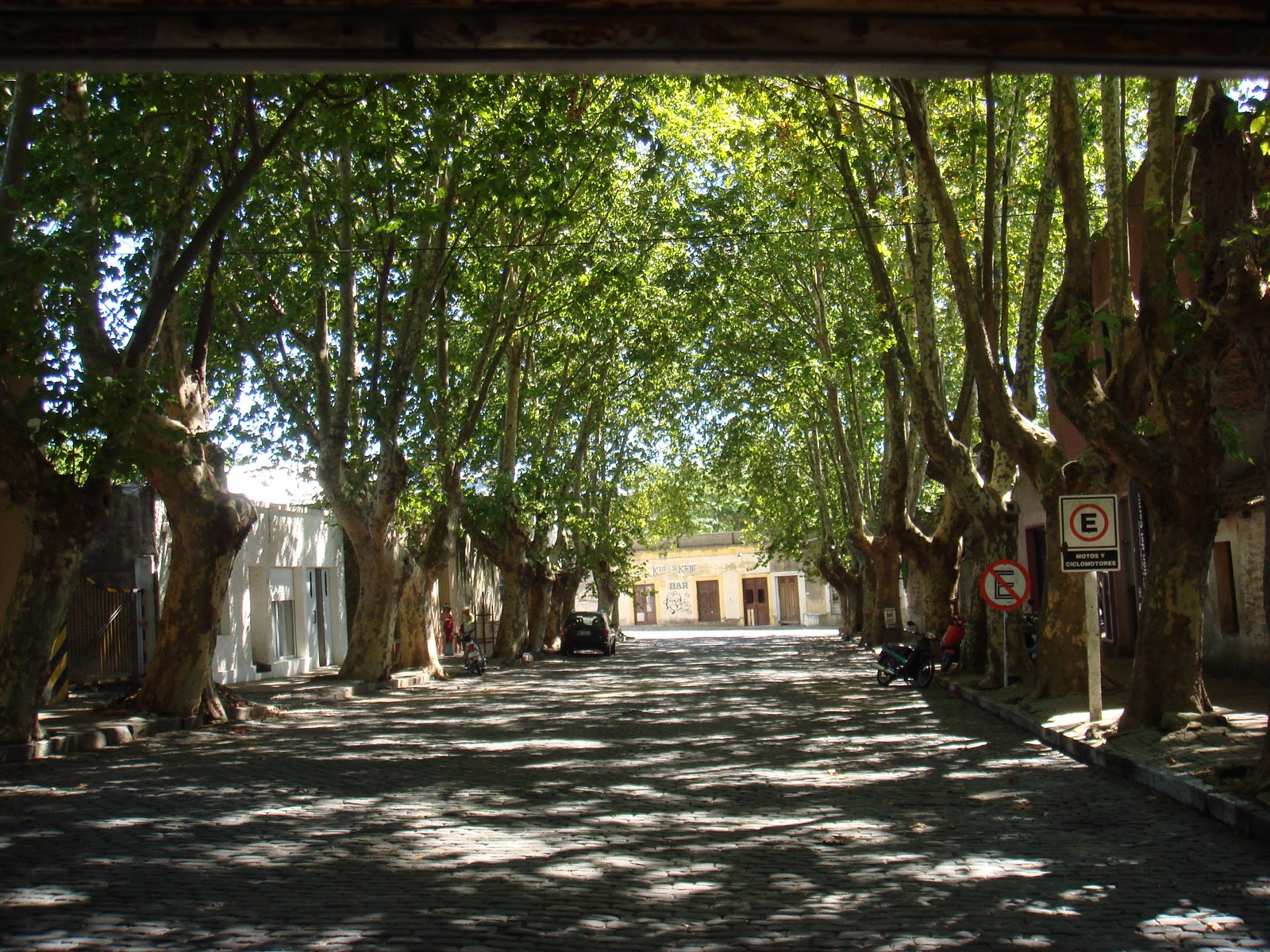
We made two trips to Uruguay from Argentina during our trip.  The first was a day trip, by ferry, to Colonia del Sacremento, a former Portuguese colony established in 1680 and now designated as a World Heritage site.  We rented a golf cart at the pier and spend a delightful afternoon exploring the area.  The wide streets were lined with huge, leafy trees that provided abundant shade.  The buildings, many of which showed their age, looked as though they had been plucked from some European community.  We took the cart up a steep hill just outside the town and enjoyed a beautiful, nearly deserted, beach.  Late afternoon, we returned to the pier to board the ferry to Buenos Aires.


Surprise!  The ferry had left.  No one told us that there was a one-hour time difference between Argentina and Uruguay during the time we were visiting.  Luckily, there was one more ferry which would depart early evening, so Linda and I did our best to turn a lemon into lemonade.  We reclaimed our golf cart and headed to the Yacht Club to wile away a couple of hours.  There was an open table outside on the deck, and a young tuxedo-clad waiter promptly took our order for a couple of martinis.  Unfortunately, he--or the bartender--had an unwarranted affection for vermouth.  Our waiter's brilliant solution to making sure we had the cocktail we wanted?  He wheeled a cart to our table with a bottle of vodka, vermouth, olives, lemon, ice, and chilled glasses.  We had a make-your-own martini fiesta while watching a brilliant sunset over the harbor.  Neither of us regretted missing the earlier ferry, although I confess that my ability to navigate the golf cart may have been somewhat impaired when we finally departed.  At least, I think I drove.


Our next excursion to Uruguay was at the end of our trip.  We flew into Montevideo, the capitol, intending to spend a night before heading south to the popular resort area of Punta del Este.  We had arranged for a driver to meet us and take us to the hotel we'd booked downtown.  At the airport, we spotted Air Force One and were reminded that President Bush was visiting Uruguay at the time.  Uruguay has a democratically elected socialist government, and one that is on good relations with the United States.  We headed downtown only to discover that our hotel was cordoned off--the President had, essentially, taken it over.  Our driver spoke to a guard--I don't trust my Spanish enough to try and communicate with men carrying guns--and explained the predicament.  The guard called for someone to relieve him, took our passports, and said he would accompany us to the front desk.  I wasn't feeling particularly good about our prospects for a room.

The staff at the front desk advised that they were sorry they had been unable to reach us (I don't think anyone ever tried) but that they'd arranged for a room at another hotel downtown, called the Crystal Palace. Linda was rather insistent that we be given the room we had booked but, as I gazed about a lobby overflowing with secret service agents and local security personnel, all heavily armed, I discouraged any argument.  The driver drove us to our new hotel and I learned that Crystal Palace translates into 'hellhole', or some similar term.  The location was in a rather seedy area of Montevideo and the room had a distinctly musky aroma reminiscent of moist gym socks.  Our solution was to ask the driver if he'd take us directly to Punta del Este, about an hour and a half drive.  He agreed, and we left behind President Bush and the Crystal Palace.

We called the Hotel Conrad, where we'd arranged to stay, and confirmed we could arrive a night early.  The Conrad is a venerable hotel/casino that receives mixed reviews from travelers.  I would recommend it for first-time visitors to Uruguay.  Most of the staff speak some English, it has the amenities of a large hotel, and a central location within easy walking distance of beaches and shopping areas.  The hotel's own beach is rather small, but it has a large outdoor pool. 


Punta del Este was a great place to visit.  It is THE place where wealthy South Americans, particularly Argentines, go for summer fun.  The town is situated on a peninsula bounded by the Atlantic on one side and the wide expanse of the Rio de la Plata, which separates it from Argentina, on the other.  Beautiful sand beaches rim the peninsula.  We were there in September, when the summer crowds had dissipated, but the weather was still great and we had no trouble finding seats in any restaurant we wanted.  Like Argentina, Uruguay is a country populated with people of European descent--88%. mostly Italian and Spanish.  Also like Argentina, this influence shows up in their food and we had some spectacular Italian cuisine during our visit.  One tiny spot, Scarlett, overlooking the ocean and decorated with posters featuring Gone With the Wind characters, served a delectable black squid ink pasta. 


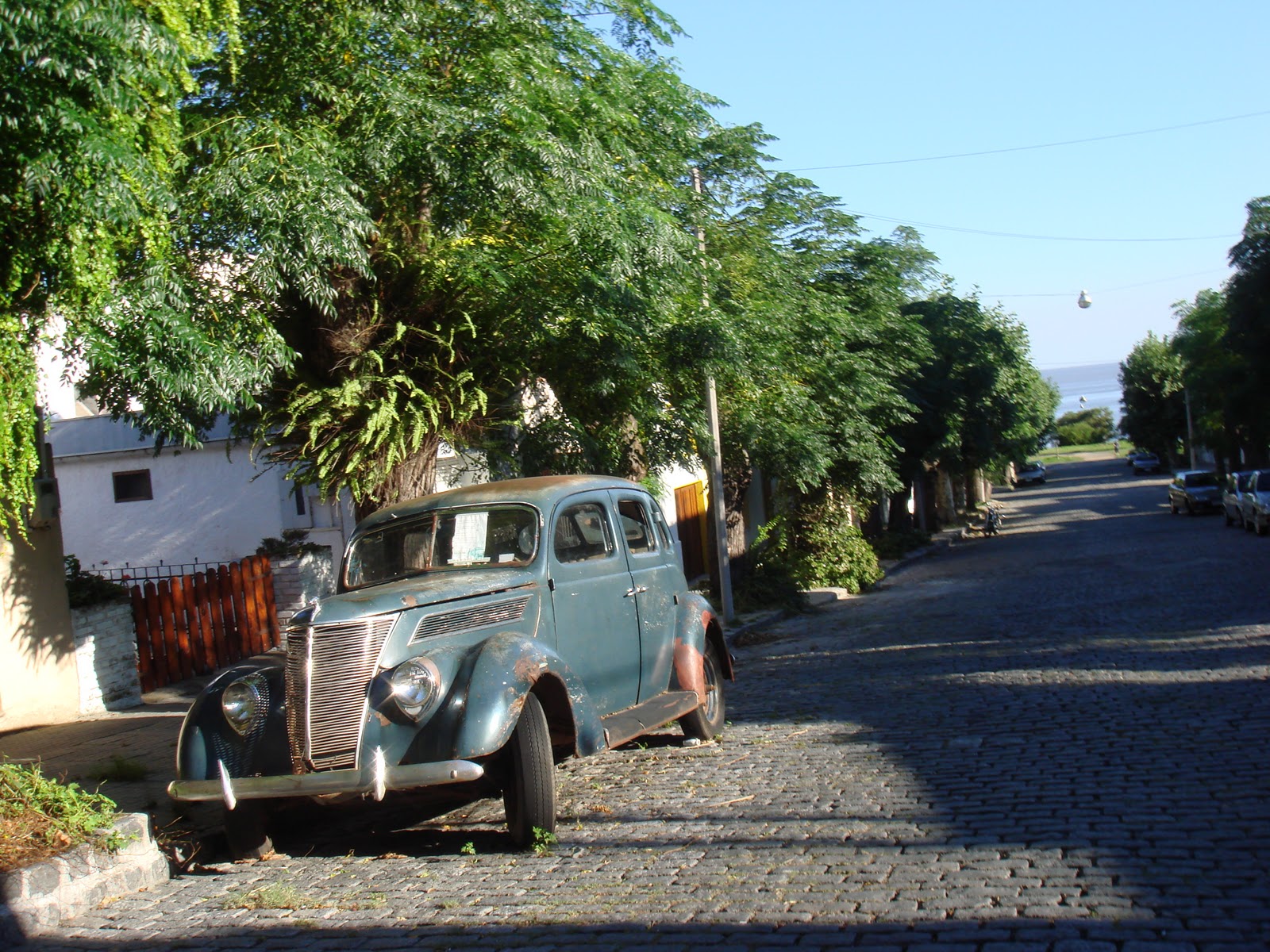
Some things about Uruguay really stood out.  First, it is a tiny nation.  The total population, of which more than half live in Montevideo, is about 3.5 million.  Indeed, they don't have street addresses in Uruguay.  You give your house a name--say, 'House of Flowers', and your mail will be addressed to House of Flowers, Main Street.  They have an affinity for old American cars, like Packards, and you'll see a few of those tooling around. They view Argentina as an arrogant older brother and debate which country makes the best dulce de leche or consumes the most mate, per capita.


yerba plant are ground and hot, nearly boiling water, is poured over them.  The tea is then consumed from a gourd through a straw.  Any visit to an Argentine home commences with the passing of the mate gourd, from person to person, all using the same straw.  Only after mate is consumed will any other beverages be offered.  Some of the gourds are quite ornate, decorated with silver, for example, and are often passed down from generation to generation.  In the mate consumption contest, however, I give my vote to Uruguay.  People drank mate everywhere, and most gas stations we saw had a machine that would dispense hot water so people could replenish their mate cup, gourd, or whatever they'd be drinking from. 


We drove the coastline away from Punta del Este on our final day in the country and saw some truly fantastic scenery.  Miles of deserted beaches, a few charming small communities and, inland, a verdant landscape of gently rolling hills.  Our sharp-eyed driver spotted a tarantula in the road and stopped for a bit so we could observe the creature first-hand.  We were content to keep our distance as the tarantula eyed us warily but held his ground until we departed.  We continued through vast expanses of range--like Argentina, cattle is king--and returned for a final night in a charming country.  Over a steak dinner, we enjoyed a bottle of tannat wine, a grape which we understand is grown only in France and Uruguay, and rued the fact that our trip was rapidly drawing to a close.

The famous Punta Del Este hand sculpture on the beach.
The sway back bridge.


This museum-restaurant-hotel was hand built by the famous Uruguayan artist, Carlos Paez Vilaro


We drove to Montevideo the next morning, with time to stop at the famed Central Market for lunch.  I enjoyed my last chivito, a sandwich consisting of thinly sliced steak, ham, egg, olives and cheese.  The sandwich alone is worth a trip to Uruguay albeit it may also cause a trip to the cardiologist.


We spent our last night in South America at the new Park Hyatt, and it was spectacular.  Easily the best Park Hyatt we've seen, constructed in part by incorporating the former palace of a wealthy Argentine family.  The ultra-modern rooms, with state-of-the-art technology, contrasted with the ornate marble floors and European sculptures that decorated the common areas.  We regretted that we'd be spending only one night.


Our flight came too early the next morning and we had our last look at Buenos Aires as the cab took us to the International Airport.  Someday, I promised myself, we'd return.  As I write this, it is impossible not to miss the passion of the tango, the richness of the culture, the stunning beauty of waterfalls, of sunsets, of the people themselves.  Yes, someday, for another sip of mate, a taste of dulce de leche, a meal of steak and malbec and, most importantly, to see a friend from long ago.  A combination that makes a journey one to savor.

Saturday, December 18, 2010

Iguazu Falls

Traveling north from Buenos Aires by plane, we visited the incredible Iguazu Falls.  You've likely seen these Falls in films including, for example, The Mission or Indian Jones and the Crystal Skull.  When Eleanor Roosevelt saw the Falls, she is said to have observed, "Poor Niagara!".  To put these Falls in perspective, here are some statistics culled from Wikpedia:

                      Iguazu Falls                  Victoria Falls                               Niagara Falls

Height              270 ft                           360 ft                                            167 ft

Width             8,800 ft                        5,600 ft                                          3,900 ft


Having been blessed to see all three waterfalls, the question is which is the most impressive?  Although I have a soft spot in my heart for Niagara--my parents honeymooned there--it ranks third of the three.  As to Iguazu and Victoria, that is a tough call.  They are very different waterfalls.  Victoria is the largest curtain of water in the world whereas Iguazu is a series of 275 waterfalls punctuated by verdant islands.  Linda and I agree on the winner: Iguazu.  As astonishing as the Victoria Falls are, the sheer number of waterfalls at Iguazu, ranging from mammoth torrents of water to delicate streams gently flowing over walls of green, challenge the senses.  We felt as though are necks were on pivots as we struggled to take everything in.


We stayed at the Sheraton Iguazu, the only hotel in the park itself, and had a view of the Falls from our balcony.  We enjoyed a martini before dinner and it was the best we had in Argentina.  Like their European counterparts, Argentine bartenders tend to use too much vermouth.  I complimented the Sheraton bartender and asked him where he had learned to make such an excellent martini.  His answer:  "Robert DeNiro showed me."  He explained that when DeNiro was filming The Mission, he stayed at the Sheraton and taught the bartender to make a martini exactly the way he liked it.  I've always enjoyed DeNiro's acting, and now thank him for making our stay at Iguazu even more enjoyable.


The largest cataract is called the Devil's Throat--note the similarity of the name to the Devil's Pool at Victoria.  Note to traveler: if an attraction has the word 'Devil' in it, ask a lot of questions about exactly what you are getting into.  To reach the Devil's Throat, you walk along a steel catwalk all the way across the river until you are on a platform perched above the water just before in plummets over the precipice.  The view, above the roar of the rushing water and the cold spray that licks at you, is frightening as you try and comprehend the power generated by the raging torrent.  Your imagination is helped by the remnants of a prior catwalk that was destroyed when the river flooded.


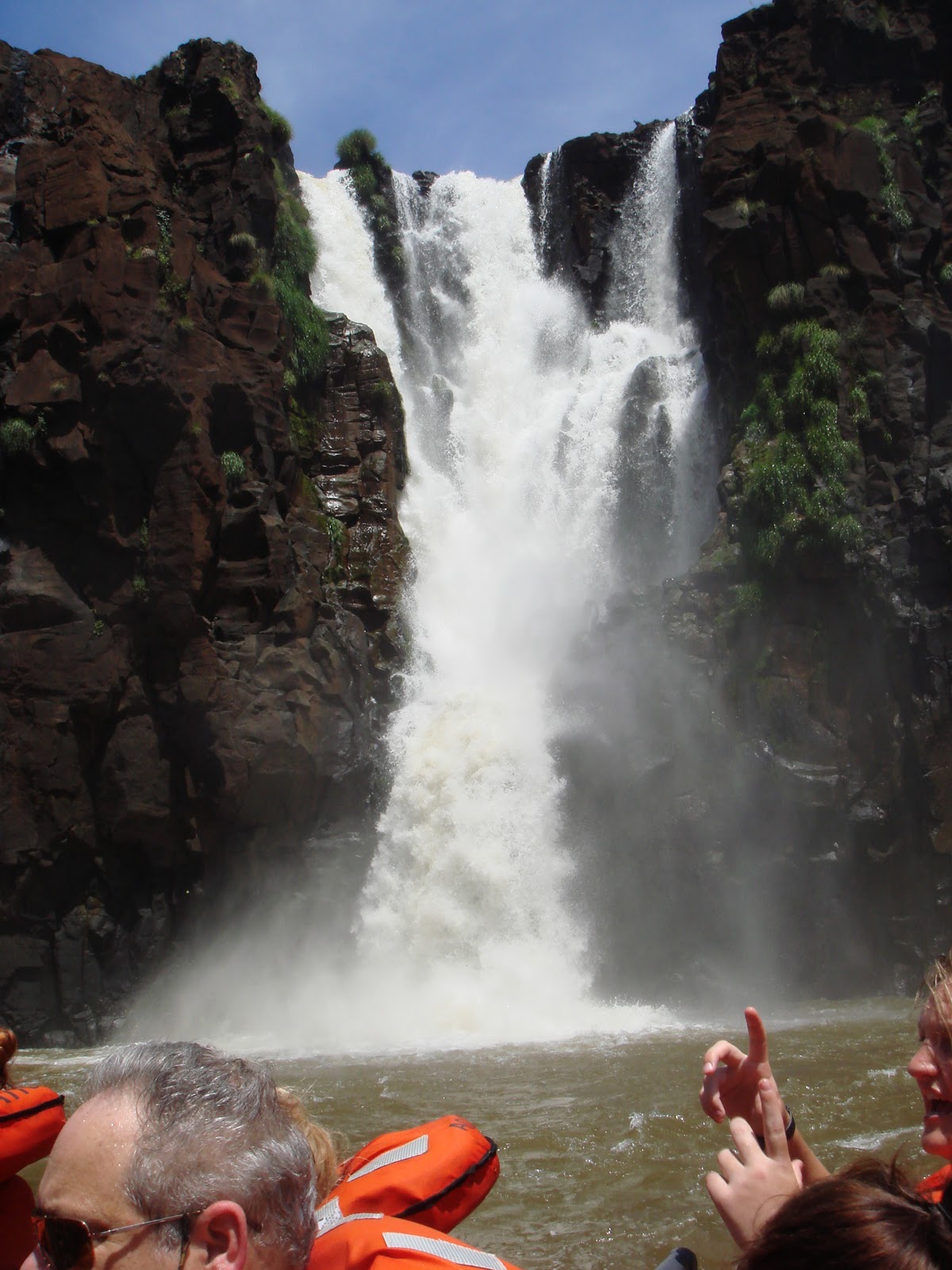
We left the cataract and took a truck along a bumpy road through the forest to the bank of the river.  There, we boarded a boat and went for an exhilarating ride to view the Falls, including up-close adventures when we curled against some of the massive walls of water as they tore into the river and everyone aboard became absolutely soaked.  All of it was great fun until the boat dropped us off and we were faced with a climb of several hundred feet.  Despite the beautiful scenery, hiking uphill in the heat and humidity was not fun.  Linda shot me several looks, along with comments I won't repeat here, and I knew that a trip to a jewelry store was in my immediate future. 


On our final day at Iguazu, I took a cab across the river to view the Falls from Brazil.  Linda opted to stay at the pool and relax, although she needed to be cautious because of an outbreak of Dengue fever--spread by mosquitoes--in nearby Paraguay.  I was not disappointed that I'd taken the trip, because the Brazilian view is very different from, but equally astonishing, as the panorama from the Argentine side.  Particularly noteworthy was a walkway to the base of the Devil's Throat.  As you stand and gaze up at the sheer immensity of the wall of water crashing down so nearby it literally takes your breath away.  An experience well worth the spray of water that soaks you; a sheen of mist that you stand and tolerate because you don't want to leave.


The taxi driver offered to take me on a side trip to Paraguay on the way back, but I declined.  Not only did I want to get back to Linda, but I did not have a visa to visit Paraguay.  When I explained to the driver about my lack of a visa, he laughed and said that Paraguay is too poor a country to patrol its borders.  He assured my that no papers would be needed but I nevertheless declined.  With my luck, I worried that I'd be intercepted and spend some time in a Paraguayan jail cell--not my idea of a good time.  I subsequently learned that the triangle where Brazil, Argentina, and Paraguay converge is, indeed, a haven for smugglers, criminals, and even Middle Eastern terrorist groups.  The jungle makes it difficult to patrol and the borders are consequently porous. 

On our final night, Linda and I had dinner at a lively restaurant in town, complete with dancing and music.  The steak was outstanding and grilled tableside.  Back at the hotel, we gazed through a clear sky to see the Southern Cross constellation and capped the evening with a nightcap in the bar.  We toasted Mr. DeNiro and looked forward to our departure in the morning and our journey onward to Uruguay.


Sunday, December 12, 2010

Buenos Aires


Almost a third of the Argentine population live in or around Buenos Aires, a truly fascinating metropolis.  We stayed at the Alvear Palace Hotel in the upscale Recoleta neighborhood.   The storied Hotel, always ranked amongst the best in South America, did not disappoint.  The elegant marble-floored lobby and mirrored bar were beautiful, the service was great, and the French restaurant was outstanding.  The Hotel also served as a perfect spot for a special reunion with an old friend, Ernesto, who traveled with his lovely wife, Roseanne, to meet us in Buenos Aires. 

I had met Ernesto on my first trip to Argentina and having the opportunity to see him again--more than 25 years later--was a real treat.  Not only did we have the chance to catch up personally, but they showed us all around town and we saw things we would never have seen if we were touring alone.  We dined at Ernesto's favorite steakhouse, along the river in the Puerto Madero neighborhood, toured the city to view some of the architecturally impressive government buildings, and circled the massive Teatro Colon.  Closed for renovation at the time, the Teatro Colon is one of the world's foremost opera houses and evidence of Buenos Aires' European influence is nowhere more striking. 

A word about those steaks--the rumors about Argentine beef are true.  I'm told that the tenderness and rich flavor stem from the fact that the cattle are grass-fed, primarily in the vast Pampas.  I can certainly vouch for the taste and understand why Argentines consume an incredible amount of beef each year.  A popular custom, and one I've personally enjoyed, is the asado.  The only way I can describe it is as a barbecue on steroids.  The meal begins around noon with wine and the first course of meat, usually sausages and intestine.  Ribs will follow later, after more wine, then other cuts of beef.  The meal will culminate, late afternoon, in steaks of various cuts and more wine.  All of this is accompanied by salad and, usually, potatoes.  Following the meal, everyone stays and converses for a while.  All in all, not a bad way to spend an afternoon.


Ernesto's beautiful daughter, Gabriella, and her fiance joined us for dinner a second night and we visited a tango hall where Ernesto's father had taken him years before.  The atmosphere was great: an old wooden building, high ceiling, columns, and dim lighting.  The show was spectacular, a series of exhibitions by skilled dancers in colorful costumes displaying many facets of the tango.  They moved with grace and seemed to glide through the spotlights, embracing the shadows in the corners of the stage, then whirling once more into the light.  Linda and I were so impressed that we vowed to put our Cleveland tango lessons to use and visit a milongra, a traditional tango hall, and dance the tango together in Buenos Aires.  But that, my friends, will be another entry...

Saturday, December 11, 2010

Argentina--Recollections

I've visited Argentina twice, the first trip in 1982 and the second, with Linda, two years ago.  Both trips were great and gave me the opportunity to learn a great deal about the culture.  The 1982 trip was in many respects a unique opportunity.  I traveled as a member of a Rotary International Group Study Exchange team which, at that time, meant I'd spend six weeks in Argentina with other young professionals. We would be hosted by families in Argentina and have the opportunity to meet professional counterparts in that country.  Because of my one semester of college Spanish, I was the third 'best' Spanish speaker which meant I stayed in homes that spoke little or no English.  To this day, I can fumble through in Spanish because of the nights spent with kind people who encouraged my efforts to communicate. Those efforts were facilitated, I might add, by generous portions of fine Argentine wines--and more on that later.  To top off what was an extraordinary trip by any measure, Argentina declared war on England over the Falkland Islands (Las Malvinas) only three weeks into our journey. 

By way of background, Argentina is the eighth largest country, by land mass, in the world and stretches from the frigid Patagonian realm of glaciers and tundra in the south to a subtropical northern climate.  Around the turn of the century, Argentina had one of the world's most powerful economies--probably in the top five--and was attractive to immigrants from around the world, but particularly Europe.  Indeed, more than 86% of the population is of European descent.  The largest ethnic group in the country are the Italians, and Buenos Aires is often referred to as the Paris of South American due to the European flavor of its architecture.

The economy, however, sputtered after World War II and remains problematic even today.  During our 1982 visit, inflation was over 1,000%.  No one saved money because it made much more sense to buy something, anything, before the currency further declined.  Today, Argentines will gaze wistfully at the stunning buildings in Buenos Aires and observe that they "built monuments for the empire that never arrived."

The stalled economy is what really gave rise to the Falklands War.  Although Argentina has long claimed the islands--tiny, windswept islands that, at the time, were home to sheep farmers of British descent--the controversy had remained diplomatic.  However, labor strikes were held nationwide in 1982 and became violent, with over 12 deaths nationally.  We witnessed a strike in Rosario, one of the largest cities in the country, and observed a tense confrontation between the strikers and a military force armed with submachine guns.  Not my idea of a pleasant afternoon.

Three days later, the military junta announced that they had ordered an invasion of the Falklands.  Everyone knew, and our hosts privately admitted, that the invasion was done to distract the nation's attention from the disastrous state of the economy.  Initial euphoria over the invasion soon disappeared when ill-prepared young Argentine soldiers, some with only weeks of training, faced combat against crack British troops, including a regiment of Gurka warriors.  The end result was a humiliating defeat for Argentina.  The silver lining, however, was the resignation of the military the very next year and, since then, the country has enjoyed a series of democratic elections. 

One other note before I close this post.  There was a significant guerrilla movement in Argentina in the 70's and 80's and the military government cracked down.  Many perceived leftists were arrested and simply disappeared.  We spoke with one man who had lived with his wife, their son, and daughter-in-law.  His son and daughter-in-law had just had their first child.  One night, masked men broke in and led his son and daughter-in-law away.  He never saw them again.  He pointed across the ground at his granddaughter, now being raised by the gentleman and his wife, and said, "She's all we have to remember them by."

The so-called 'Dirty War' was viewed, at the time, by many Argentines as necessary.  Subsequently, however, when the extent of the atrocities committed by the government came to light--torture, throwing live captives from helicopters hovering over the Atlantic--the people were outraged.  The days of military rule are not fondly remembered. 

Under the circumstances--including the fact that America sided with England during the war--we were treated royally by our Argentine hosts.  I hope in coming posts to share what I can of a fascinating culture, the bond of drinking mate, and the sensual movements of the dance called the Tango.